
Articles
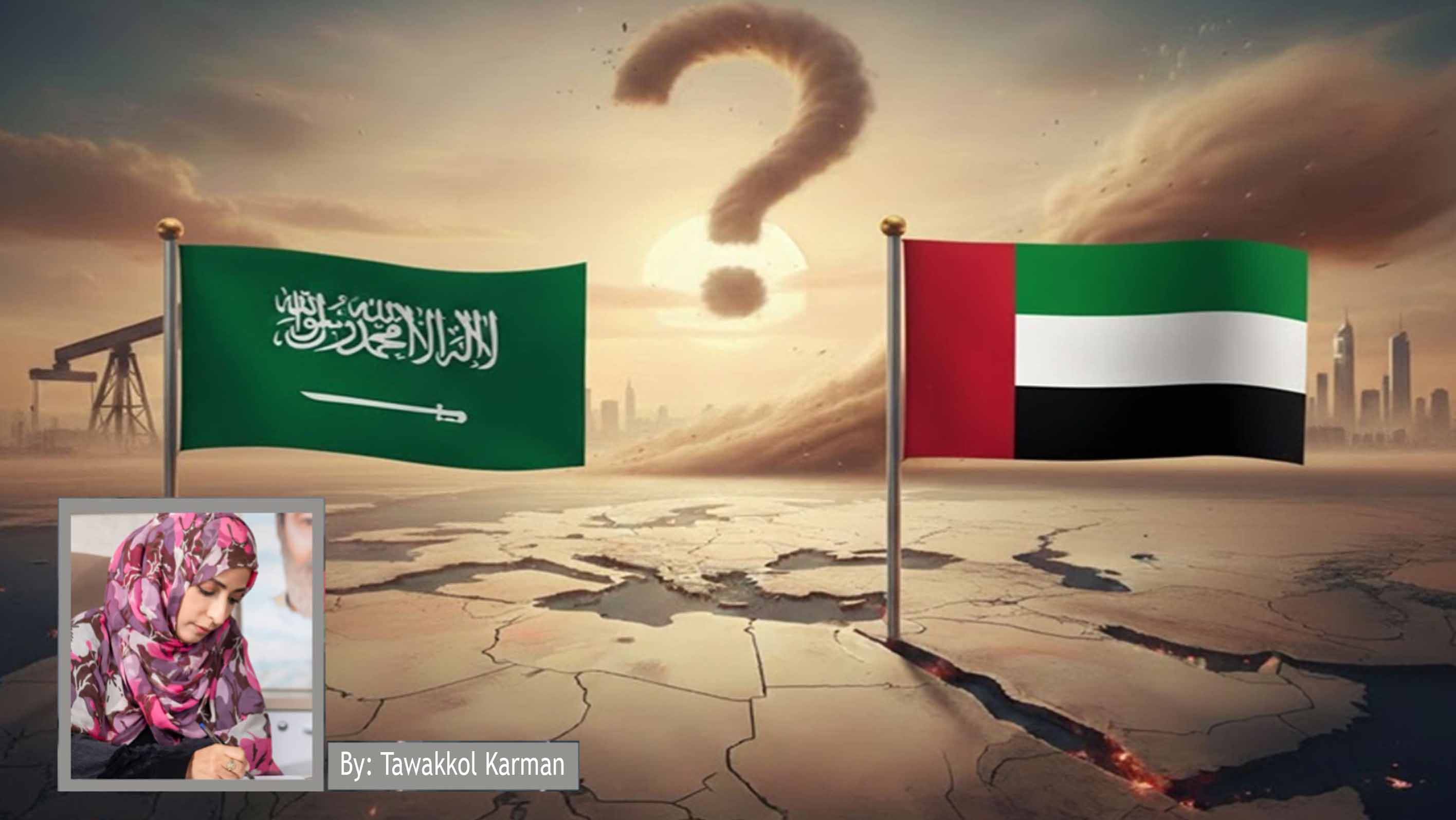
Saudi Arabia and the UAE: Strategic Rivalry or Ephemeral Dispute?
There is solid ground for asserting with confidence that the conflict involving the UAE and Saudi Arabia is an existential clash of two opposing strategies. By militarizing and fragmenting states through militias, the Emirati strategy has woven a ring of fire around Saudi Arabia. The tightening grip suggests that it is only a matter of time before the flames reach the kingdom itself.
In response, Saudi Arabia has embraced a counter-strategy after awakening to the existential danger—a late awakening, but still in time. This approach rejects the militarization and fragmentation of states, insisting instead on treating them as unified nations governed by strong central authorities.
From Sudan to Somalia to Yemen, Saudi Arabia has carried this counter-strategy forward, delivering swift and crushing blows against the UAE’s chaotic project. Each strike has left Abu Dhabi reeling, its ambitions staggering and gasping in the throes of collapse.
What the region had long awaited was a Saudi awakening—or even a Saudi repentance. The UAE, meanwhile, has yet to recover. Shaken by Riyadh’s sudden and forceful moves, it finds itself disoriented, brimming with vengeful sentiment and vast resources, yet for now powerless before Saudi Arabia’s momentum—though not forever.
This is no longer merely an existential clash between two strategies; it is the moment at which one must extinguish the other. There is no room for half-measures, no tolerance for partial victories.
The question, then, is what comes next.
Saudi Arabia, following its belated awakening and what I describe as a great repentance—which I believe has already taken place—will move to unify all military, security, and civil forces across the liberated Yemeni provinces under the leadership and supervision of the legitimate government, while providing sufficient economic support to stabilize all sectors.
Then, together with the legitimate government, it will advance to Sana’a—whether peacefully or through war—in order to extend the state’s reach across all of Yemen.
In either scenario, the Houthis will face decisive pressure: either to lay down their arms or to enter a national framework—a state for all that monopolizes weapons and guarantees political rights.
If Saudi Arabia has truly awakened to the Emirati danger, it has both the capacity and the conditions to move against the Houthis with the same speed and force it used to expel the UAE and liberate Hadramaut, al-Mahra, and Aden.
At this point, a question naturally arises: am I, in these words, offering advice to Saudi Arabia—after having long insisted that Saudi Arabia cannot be advised, since what it pursues is an agenda rather than mere mistakes or unintended failures? Am I shifting my position? Why not. Positions on policies change as those policies themselves change.
My compass is the interest of my country, and it guides everything I say—not out of desire for anyone’s approval, nor fear of anyone’s disapproval, including that of “mighty” Saudi Arabia.
There is a shared existential danger facing both our countries, and I expect this battle to be resolved in a way that serves all—along the lines I have already outlined. In a greater Yemen, every issue must be open to free discussion and collective agreement, without external imposition: no red lines, only freedom, consensus, and choice.