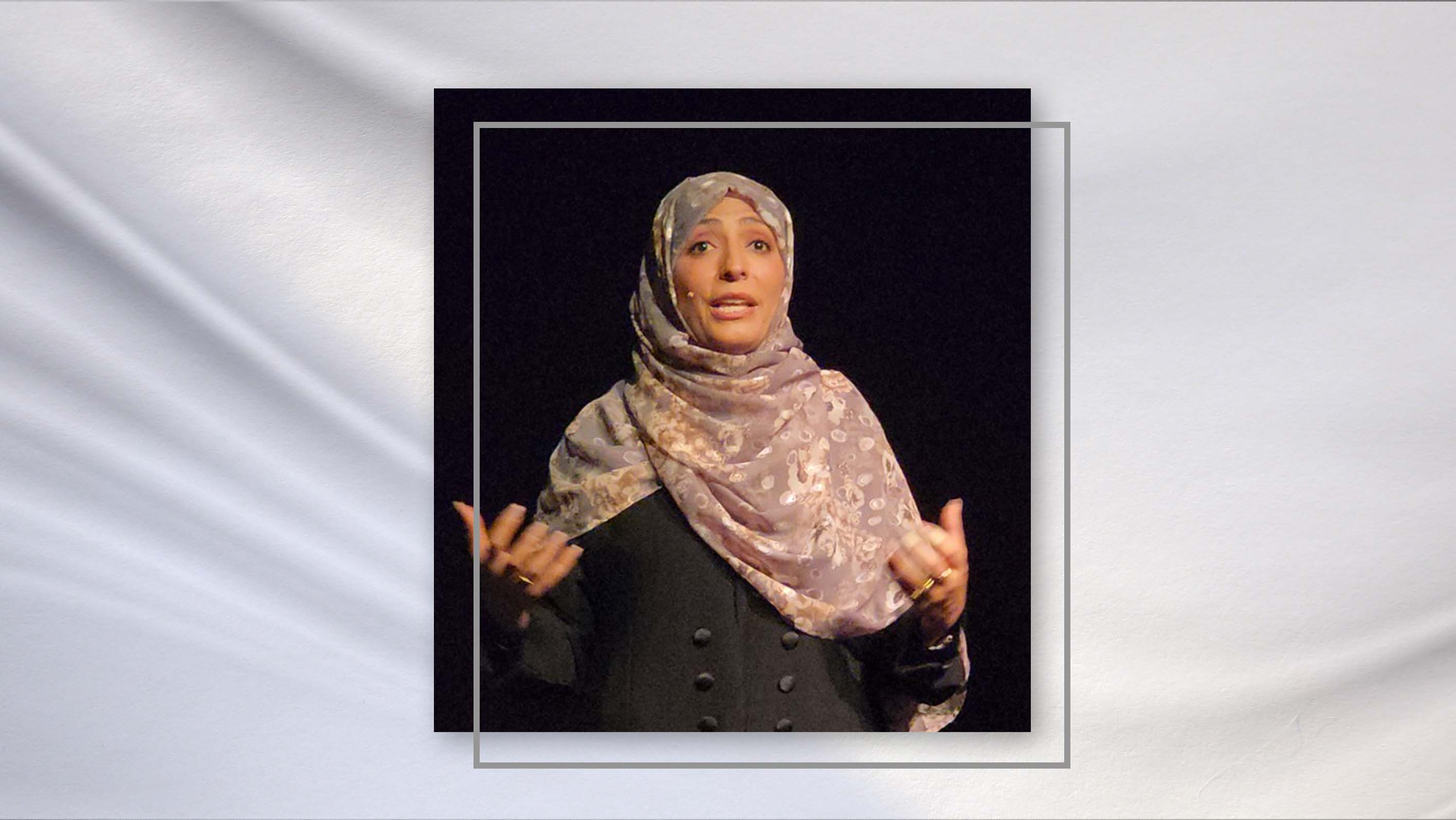
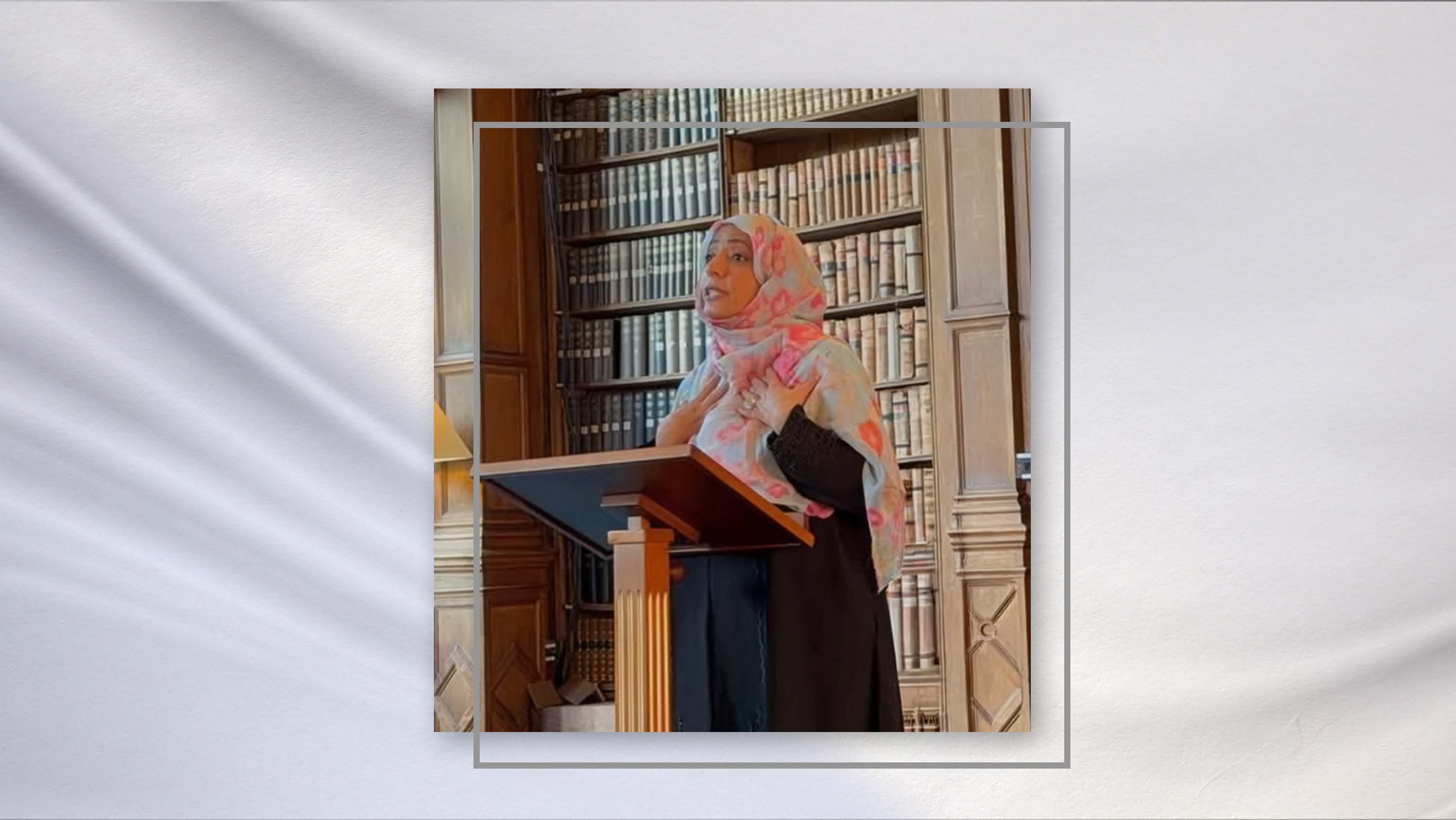
To begin, I would like to express my delight at being part of this forum, which serves as a vital bridge for cultural and intellectual exchange.
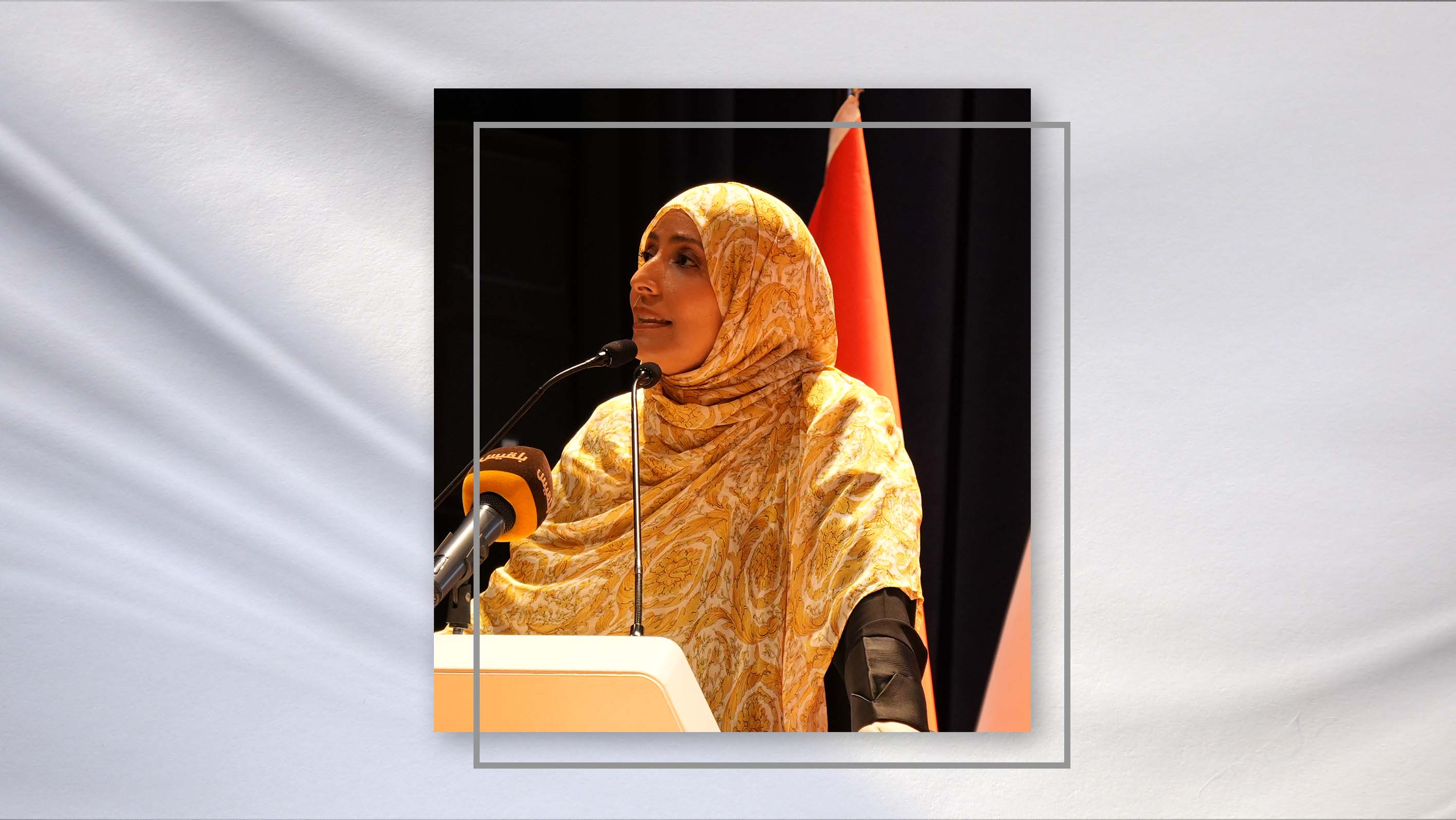

To begin, I would like to express my delight at being part of this forum, which serves as a vital bridge for cultural and intellectual exchange.
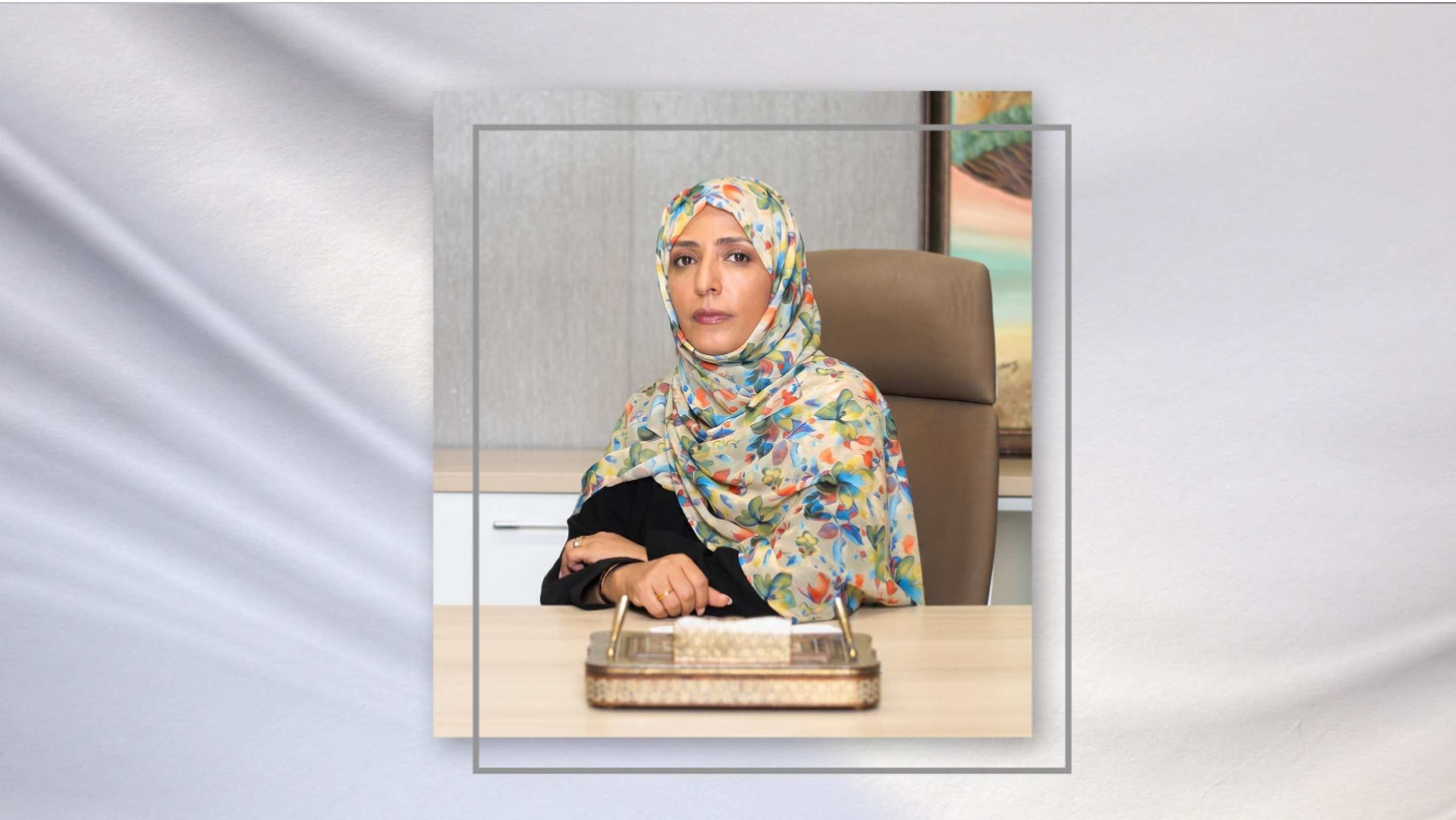
In the name of God, the Most Compassionate, the Most Merciful.
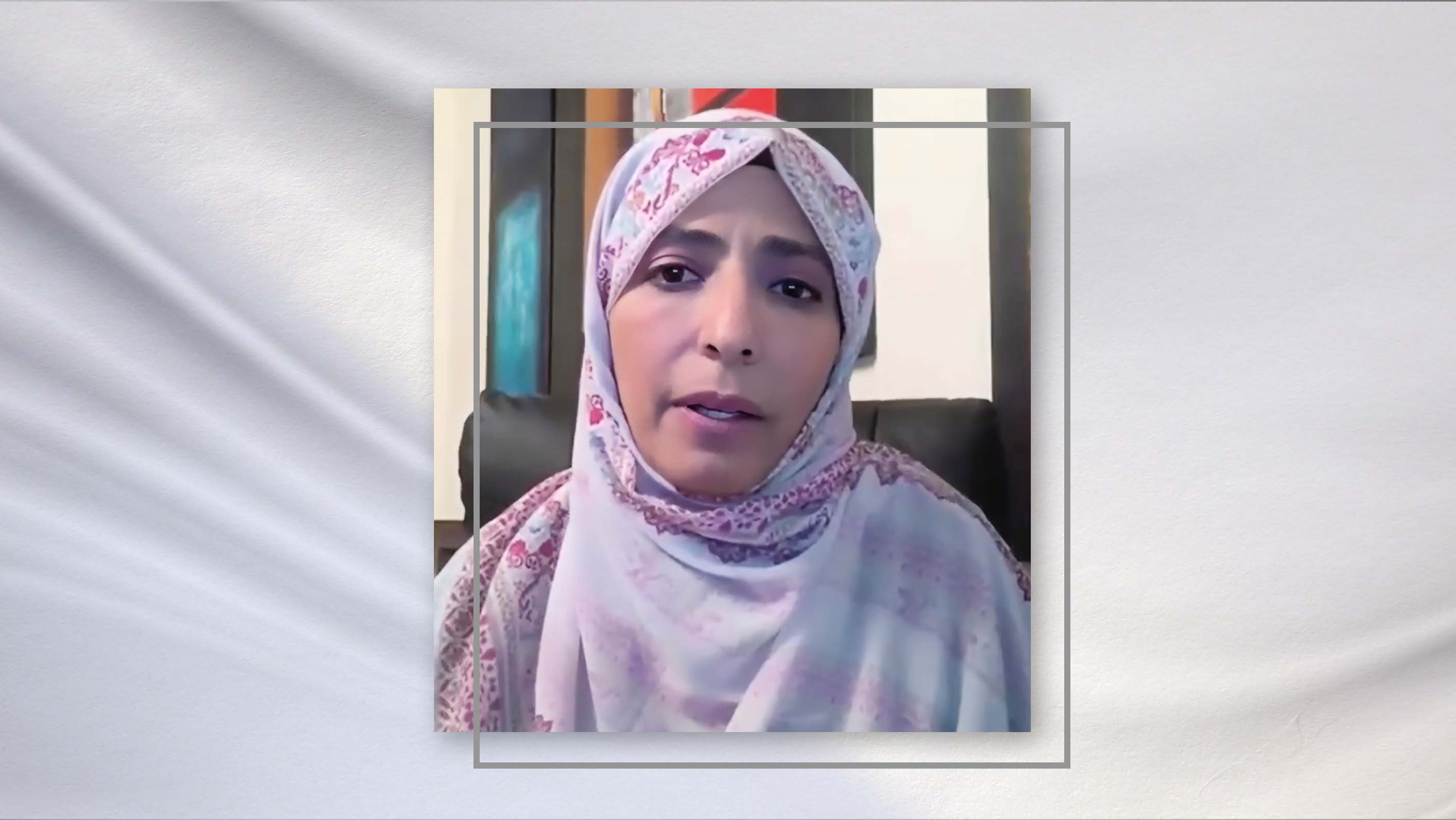
Ladies and gentlemen,
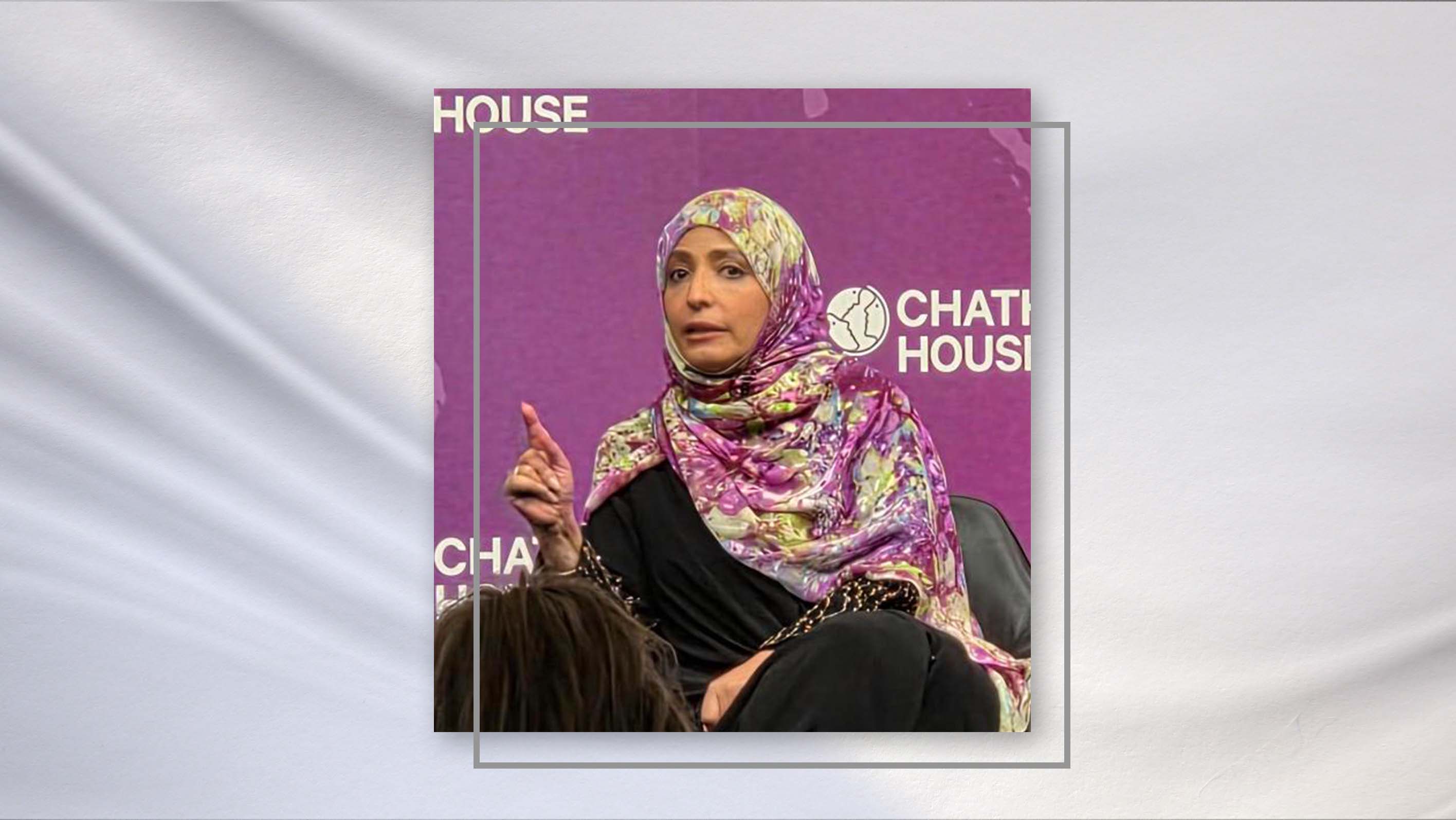
Farea Al-Muslimi: Hey, welcome everyone. I guess we are live. One second before that—if you are using translation, I will switch to Arabic in a second. But if you need a translation, please do pick one. And if you’re listening to translation, please make an effort to keep your sound low because it will affect those around you who don’t need it. And if someone near you has a loud voice, try to use the translation and ask them politely to turn it down, please. Okay.
Welcome everyone. I’m Farea Al-Muslimi, Farea Al-Muslimi, the Yemen and Gulf specialist here at Chatham House. I would like to thank all of you for being here with us. This session today is part of a series of sessions implemented by Chatham House with a number of Yemeni and regional actors, specifically within the MENA program led by Dr. Lina Khatib.
This is also part of a series of discussions conducted by Chatham House on a number of countries in the region, including the Gulf, Iran, Libya, Iraq, Palestine, Israel, and the Levant, as well as economic files. Coincidentally, this is also part of a series of discussions with Nobel Prize laureates. Just an hour ago we had a guest from Russia online.
This session will not adhere strictly to Chatham House rules because it will be broadcast on social media and available online. We have a full hour. I will use the first 15–20 minutes in discussion with our guest, after which I will open the floor for questions and answers from the audience here in the hall, as well as participants via Zoom who can present their questions at any time starting now.
We’re very happy with the weather today—our guest seems to have brought it with her. We’re also very happy to have a dear guest, Mrs. Tawakkol Karman, who is someone I think we all know. I won’t spend too much time introducing her, but I want to mention a few of her achievements.
Last night in Berlin she was presented with the Guardian of Democracy Award, and she arrived this morning straight from Berlin to be with us. In addition, Dr. Karman is a Nobel Peace Prize laureate for her role in the peaceful struggle for freedom of expression and women’s rights. She established Women Journalists Without Chains in 2005, and she is the head of the Tawakkol Karman Foundation, one of the most important foundations working on developing youth around the world.
She also serves on Meta’s Oversight Board, which covers both Facebook and Instagram, and more importantly, she is a prominent figure in the Yemeni youth revolution. While we often hold differing opinions, we share one important commonality: we were both shaped by the events of 2011. That year, and the subsequent Arab Spring revolutions, unfolded with distinct outcomes across the region. Yet the most significant legacy, in my view, is how it empowered local voices.
Before 2011, it would have been easy to imagine dozens of speakers and moderators in a space like this, but not Tawakkol Karman or myself. This is something that might be overlooked today, but those of us who lived through 2011 remember it vividly.
In any case, we have many issues to discuss today. First, it is an opportunity to commemorate the fifteenth anniversary of the February Revolution. These fifteen years allow us to look back and reflect on the lessons learned from the Arab Spring in Yemen and its outcomes.
It also marks ten years since the Houthi armed group seized power in Yemen, and it reminds us of the Arab intervention led by Saudi Arabia and the United Arab Emirates in 2015. We will try to address all of these issues within our 60 minutes, in addition to the UN-led peace process in Yemen, while taking into account internal developments.
If time permits, we will also discuss regional issues related to Gaza within the framework of the Peace Council, as well as the state of information and journalism worldwide. And since we have a Nobel laureate guest, it will be particularly interesting to ask her whether she believes Donald Trump deserves the Nobel Prize—an important and complex question in itself.
So, welcome once again to Chatham House. I would like to start with February 2011 during the peaceful youth revolution in Yemen. This is an opportunity to go back into the past and reflect: where did February succeed, where did it fail, and what lessons can be learned for social transformations elsewhere in the world? From your perspective, 15 years on, how do you view the events of that February?
Tawakkol Karman: First, a glorious February anniversary to you, Farea, and a glorious February anniversary to all Yemenis and to all those who believe in freedom and democracy as principles that should never be compromised. Indeed, we are now marking the fifteenth anniversary of the February Revolution.
When we remember the revolution, we recall it with great pride and honor. It was a pivotal historical moment in the lives of Yemenis, and we also remember it as a moral and political reference point—a path toward a solution for extricating Yemen from what it was under the rule of dictator Ali Abdullah Saleh, and from what it suffers now due to the coup of the Iranian-backed Houthi militia, as well as the ongoing war led by Saudi Arabia and the UAE, even though the UAE was recently expelled from Yemen.
Let us remember that when we talk about the February Revolution, we must look at it from three essential angles: first, the goals and justifications of the revolution; second, the means of the revolution; and finally, the outcomes of the peaceful revolution and its practice.
Let us begin by discussing the goals and justifications of the February Revolution. The revolution was an inevitable consequence of the deep political and economic imbalances that plagued Ali Abdullah Saleh’s rule for 33 years. His regime was marked by failure, corruption, tyranny, and violence.
Saleh transformed the state—which should have been a social contract between ruler and ruled—into a system controlled by himself, his family, and his tribe. Under his rule, Yemen suffered from widespread poverty and unemployment. He governed through violence, employing a “divide and rule” policy.
Throughout his tenure, we recall the wars he waged: beginning with his involvement in the assassination of President Ibrahim al-Hamdi, followed by wars in the central regions, the Sa’dah War, and before that, the 1994 war. For Saleh, violence was not incidental but a deliberate tool of governance—fueling conflict even between tribes, perpetuating vendettas, and using terrorism as a means to blackmail both his opponents and the West.
The revolution was an inevitable result of the complete failure of the ruling regime—an economic, political, and security failure. This failure culminated in a genuine political deadlock. Elections no longer played their true role, and no reforms were introduced to the electoral register or other areas.
A number of political reforms demanded by the parties were rejected by Ali Abdullah Saleh’s regime, and ultimately he attempted to bequeath power to his son. This attempt led to the collapse of the political equation after reaching a dead end.
The Yemeni people responded by declaring that it was time to open a new gateway for Yemen’s future and to revolt against this regime as a way out of the dark tunnel. Thus, the Yemeni people proclaimed the peaceful popular youth revolution.
Farea al Muslimi: But why did you fail to break out of the cycle of violence? Today, in Yemen, more people treat positions of power as something to be inherited by their children, and the conflict has spread wider than before. So what exactly went wrong?
Tawakkol Karman: Let me first address the issue of the peaceful revolution, especially as we discuss its legacy. The most important achievement of the 2011 revolution was that it established a culture of nonviolence as a means of change in the face of Ali Abdullah Saleh’s violence. We carried out a great peaceful revolution in which the entire Yemeni people participated, despite the fact that the population possessed at least 70 million weapons. This should not be overlooked: the Yemeni people chose nonviolence as their path to change.
Secondly, the revolution forced Ali Abdullah Saleh to step down peacefully after more than a year of genuine commitment to nonviolent resistance—responding to his violence with flowers and chants. The Yemeni people did not retaliate with violence, and this steadfast commitment compelled Saleh to relinquish power peacefully. It is a point often overlooked or ignored.
What did the revolution produce? This is the second point. First, it established a culture of nonviolence, which is crucial and must never be transgressed. Second, it overthrew the dictator through peaceful means. Third, it managed the transitional phase with strong commitment to its own standards.
The revolution’s objective was to move Yemen from corruption, failure, and tyranny to a democratic republic that guarantees rights and freedoms, respects equal citizenship, and ensures good governance. During the transitional phase, even though the revolution was not directly in power, it upheld these standards. For three years, it safeguarded rights and freedoms—there was not a single political opponent in prison, demonstrations were freely allowed, and relative economic stability was achieved, including wage increases for employees.
Most importantly, the revolution brought all Yemenis together at one dialogue table. From north to south, east to west, all components of Yemeni society discussed the country’s issues: the form of the state, the economy, the army, and long-standing grievances such as the Saada and southern issues. The National Dialogue laid out a roadmap for Yemen to escape the dark tunnel.
This was a crucial stage, and I call upon all revolutionaries—both in Yemen and across the Arab Spring—to defend their revolutions and their achievements during the transitional phase. People now say our revolutions failed. No, they did not fail when they managed the transition; rather, their achievements were overturned. After completing the comprehensive National Dialogue, which provided solutions and a roadmap, we finalized a draft constitution that could have propelled Yemen forward.
Who obstructed this path? The counter-revolution—the enemies of change: Ali Abdullah Saleh and his allies in the Iranian-backed Houthi militia, together with regional powers such as Saudi Arabia and the UAE. I will explain this shortly.
So these are the achievements of the revolution. Do not say that the revolution failed. We achieved peace by overthrowing the dictator through nonviolent means, and when we governed for three years, we made a promise and kept it. We were on the verge of moving from the revolutionary stage to the constitutional stage. But then the coup happened—and I will explain what took place in that coup.
Farea al-Muslimi: You hold the previous regime and regional actors responsible for the failure?
Tawakkol Karman: Exactly, completely.
Farea al-Muslimi: What about the party leaders?
Tawakkol Karman: Let me explain. The transitional phase was sabotaged—it did not fail. The wheels of change were deliberately stopped. Three main factors undermined the process.
First, the dictator’s revenge. Ali Abdullah Saleh declared, “After me, the deluge.” Having failed to build a modern state of institutions, law, rights, and services, he sought revenge against the revolution to prevent its success. The pivotal moment came when Yemen was about to put the draft constitution to a referendum. We were only months away from a new Yemeni state. What did Saleh do? He committed the greatest act of treason in Yemen’s republican history: he allied with the Iranian backed Houthi militia, stormed Sana’a, blocked the constitution, besieged the transitional authority, and seized control of the capital.
The surprising question is not only that he allied with the Houthis, but also who helped him in this alliance. The paradox is that Saudi Arabia and the UAE—despite their contradictions and rivalries—were the ones who assisted him.
Farea al Muslimi: You hold Saudi Arabia and the UAE more responsible than Iran for the downfall of the revolution?
Tawakkol Karman: No, of course not. But I do hold the UAE responsible because they directly supported Ali Abdullah Saleh in the fall of Sana’a, while Saudi Arabia remained silent. There was Saudi approval of this takeover, and it is certain that the Houthis were supported by Iran. Saudi Arabia and the UAE differ on many regional issues, but they agree on suppressing the Arab Spring—especially the Yemeni revolution—because they fear the contagion of democracy reaching them. They are enemies of the Arab Spring in general and of peaceful revolutions in particular.
Beyond that, Saudi Arabia and the UAE fear the emergence of a new Yemeni state. The revolution’s main goal was to build a state based on institutions, rights, freedoms, democracy, sovereignty, national independence, and good governance.
Farea al Muslimi: We’ll return to the Saudi and Emirati agenda. But is it conceivable that after 15 years there has been no self criticism within the revolution? Let me put the question more clearly: When I asked people online, “What are your questions for Tawakkol Karman?” many argued that it’s unreasonable for the same rhetoric against the regime to persist unchanged after 15 years. Don’t you see how easy it is to simply blame the past and demonize the former regime—and, of course, a large segment of the Yemeni population that was loyal to it?
Tawakkol Karman: How can you call it demonization? We are stating the justifications for the revolution. Our revolution did not come in vain; it was not a reckless adventure. It was an inevitable consequence of the corruption, tyranny, and failure of the previous regime.
But yes, the revolution made mistakes. The most significant was accepting immunity for Ali Abdullah Saleh, shielding him from accountability. This was a grave error—not only by the revolution but also facilitated by the United Nations and foreign powers. Another mistake was that the political parties, partners in the revolution, were not up to the task. They failed to manage the transitional phase properly. But these were mistakes, not crimes.
Foremost among them was signing the power transfer agreement and accepting Saleh’s immunity without guarantees. His continued presence in politics and influence over the army enabled him to undermine the transition. In addition, the parties treated the state as a personal fiefdom, and corruption spread. Finally, they surrendered national decision making power and proved unable to confront the counter revolution. They could not safeguard the peaceful revolution against its enemies.
Farea al Muslimi: Speaking of handing over national decision making power, we can move from the revolution to 2015 and the entry of Saudi Arabia and the UAE into the war in Yemen. In your opinion, what was the agenda of these two countries in Operation Decisive Storm? And generally speaking, what do Saudi Arabia and the UAE want from Yemen now?
Tawakkol Karman: I’ll tell you. When there was direct Emirati support for Ali Abdullah Saleh, specifically in his alliance with the Houthi militia, the plan was clear: the UAE drew a red line—Saleh and the Houthis were to confine themselves to Sana’a and the north; they were not allowed to move south. But Saleh broke the agreement and went to Aden. That was the red line for both Saudi Arabia and the UAE.
This is why Operation Decisive Storm was launched, led by Saudi Arabia, which declared its objective to be restoring Yemeni legitimacy and confronting Iranian expansion through the Houthis in Sana’a—especially after Iran claimed Sana’a as the fourth Arab capital under its control. The stated objective was a coalition to support legitimacy against Iran and the Houthis. But in reality, the war’s objectives shifted.
The coalition transformed into a Saudi Emirati alliance, and their agendas diverged from the start. Saudi Arabia’s agenda was to defeat the Houthis and counter Iranian influence, but by controlling the central administration of the state through the legitimate government—while still exercising guardianship over it. The UAE, however, had a different agenda. It did not recognize Yemen or the legitimate government. Its plan was to dismantle the country: the north for the Houthis, and the south under a militia controlled by the UAE.
Farea al Muslimi: In April 2015, you gave a well known interview to Okaz newspaper in which you welcomed Operation Decisive Storm. That changed later. What exactly happened?
Tawakkol Karman: Do you believe Okaz?
Farea al Muslimi: The interview is available on their website.
Tawakkol Karman: I did not explicitly welcome Operation Decisive Storm. What I hoped for—and demanded—was that Saudi Arabia’s role be to confront the Houthi militia, which was destroying the state, and to confront the alliance between Ali Abdullah Saleh and the Houthis. I called on the Kingdom of Saudi Arabia, and I still call on it, to play a genuine role in building the Yemeni state.
The Yemeni state cannot be built through guardianship over the country, nor through creating instruments of influence outside the framework of a unified state—as the UAE is doing—nor through remaining silent about the crimes of other countries, which Saudi Arabia has done recently. What I have called for, and continue to call for, is a genuine partnership with the Yemeni state that must now be rebuilt with every effort.
Farea al Muslimi: Speaking of the state and partnership, do you consider the current Presidential Council a state building project or a project within the hegemony you’re talking about?
Tawakkol Karman: Unfortunately, the Presidential Council is a reflection of the division of influence between Saudi Arabia and the UAE within Yemen. The Arab coalition led by Saudi Arabia claimed its goal was to restore legitimacy and rebuild the Yemeni state. In reality, they dismantled the state and undermined legitimacy. Instead of legitimacy resting with President Abd Rabbuh Mansur Hadi, it became divided between Saudi and Emirati administrations.
The Saudi Emirati dispute began with the war’s objectives. Saudi Arabia wanted to defeat the Houthis and counter Iranian influence through a state entity under its guardianship. The UAE’s agenda was different: it sought to dismantle Yemen by creating armed formations and re engineering the country’s security, political, and military structures.
The most dangerous development has been the transformation of the war—from a conflict between the legitimate government and the Houthi coup—into a struggle between competing instruments of influence in the liberated areas. The worst role, even worse than that of the Houthis, has been the UAE’s role in Yemen. Its strategy has been to dismantle the country, re engineering Yemen’s security, political, and military structures, dividing it into a Houthi controlled north and a south under its influence.
The UAE has occupied islands, coastlines, and ports, formed numerous militias directly loyal to it, prevented state institutions from exercising authority, established prisons, and committed human rights abuses. What the UAE has done remains the greatest threat facing the Yemeni state to this day.
Farea al Muslimi: Let’s zoom out a bit. We have civil war, a failed state transition in Yemen, and destructive regional military interventions. Can you still envision peace in Yemen? Is it possible that one day we could reach a peace agreement with the Houthis, for example, or among all Yemenis? Do you still believe peace is possible in Yemen?
Tawakkol Karman: Of course. First of all, I reject the characterization of the war in Yemen as a civil war. The war in Yemen is not a civil war, and it has not escalated to that level of intensity. This is precisely why the chances for peace in Yemen remain very high. Despite all the complexities—the involvement of external actors like Iran, Saudi Arabia, and the UAE—the war has not descended into sectarian or ethnic conflict. On the contrary, Yemeni society is cohesive and harmonious; Yemenis are defending one another.
Farea al Muslimi: Can you imagine signing a peace agreement with Abdul Malik al Houthi?
Tawakkol Karman: Of course—if they relinquish their weapons and accept that the state is the sole owner of arms. This applies to the Houthis and to all other groups. Remember, the February Revolution’s most important goal was to ensure that a stable, independent state cannot coexist with factions that challenge its exclusive right to possess weapons. Yes, we call for peace with all armed groups, provided they abandon loyalty to entities outside the Yemeni state and integrate fully into it. The Yemeni state is the unifying framework for all Yemenis, and it is the identity under whose umbrella we must all find shelter.
Farea al Muslimi: Let’s move on to a more serious issue. Can you also envision a peace agreement in Gaza, and what is your assessment of Trump’s current Peace Council—or the Trump peace plan for Palestine?
Tawakkol Karman: To me, this Peace Council project is less about peace and more about undermining it, because it is fundamentally flawed in both its structure and its political and ethical vision of the Palestinian cause.
First, it does not recognize the international legal framework for resolving the Palestinian issue. It ignores Security Council resolutions and international legitimacy regarding the Palestinians’ right to self determination and to establish their own sovereign state. Within this council, there is no genuine representation of the Palestinian people. It was founded on the exclusion of Gaza, treating it as a separate entity and distancing it from all arrangements related to the Palestinian issue.
Therefore, this council—positioning itself as an alternative to the United Nations—has no real prospects unless it acknowledges the international outcomes of the just Palestinian cause, foremost among them the Palestinians’ right to self determination. A council whose members and leadership include figures like Benjamin Netanyahu and Tony Blair—both accused of war crimes—cannot credibly create sustainable peace.
So far, the Council has failed to impose or even propose a formula to stop the war in Gaza, let alone prevent Israeli killings inside the Strip or address their crimes in the West Bank.
Farea al Muslimi: So, I understand from your words that Donald Trump doesn’t deserve the Nobel Prize?
Tawakkol Karman: When you talk about the Nobel Prize and Trump, you must consider the values of the Nobel Prize, its criteria, and its ethical philosophy. The prize is awarded to those who genuinely work to establish and promote global peace and security—by stopping wars, reducing weapons and armies, strengthening brotherhood among nations, and reinforcing international law and human rights. So, let’s ask: what has Trump done?
Firstly, regarding reducing armies and weapons, Trump increased military spending in the United States and withdrew from the Intermediate Range Nuclear Forces Treaty. He even contributed to the proliferation of weapons among nations. He did not work to end militarization worldwide. And what war has Trump ended so far?
Farea al Muslimi: If we go back to…
Tawakkol Karman: Let me address this, because there’s a lot of talk about whether Trump deserves the Nobel Prize. Before I give you an answer, let me pose a question: why doesn’t Trump deserve the Nobel Peace Prize? He didn’t stop mobilization, he didn’t stop global militarization, and he made no genuine effort to end wars.
In fact, regarding the two most important wars—the Gaza war and the war in Ukraine—Trump now wants to hand Ukraine over to Putin, rather than work toward a genuine peace agreement based on Ukraine’s right to reclaim its territory and sovereignty. And in Gaza, he did nothing; he abandoned the Palestinian cause and reduced Gaza to a real estate deal.
Another important point is the principle of promoting brotherhood among peoples—“global brotherhood”—which is one of the Nobel Prize’s foundations. What did Trump do? He exacerbated division and spread hatred among Americans and across the world. He became a symbol of global fascism, polarization among peoples, and polarization between democratic and authoritarian camps.
Does he deserve the Nobel Prize according to these criteria? Of course not.
Farea al Muslimi: But—to be honest—most Nobel laureates later became “Nobel laureates for weapons.” Take Abiy Ahmed, for example, who waged war on a large segment of the Ethiopian population. Obama bombed Yemen with drones in one year more than Bush did in eight years.
Tawakkol Karman: I can’t defend decisions on this subject. Nobel committees say they don’t evaluate what a laureate does after receiving the prize, though I wish they did. But you asked me if Trump deserves the Nobel Prize. Certainly not, because he hasn’t done anything that aligns with the Nobel philosophy and standards, which are based on respect and working to promote global peace and security.
Farea al Muslimi: No problem, FIFA compensated him. I’ll move on to one last question before turning to the audience, which is specifically about the media. Given your media background and your role on the Oversight Board for Facebook and Instagram, aren’t you concerned about the sheer volume of misinformation circulating on Twitter and Facebook? How do you interpret this current situation regarding the spread of misinformation globally, especially on social media?
Tawakkol Karman: Before that, we must talk about the state of democracy, as this is one of its manifestations. Global democracy is now in danger, and this is evident in the encroachment of these large corporations that control the algorithms—unfortunately—on these platforms, even as they protect freedom of opinion and expression. This is my role within the Oversight Board for Facebook and Instagram.
Farea al Muslimi: To what extent do you see the Oversight Board as effective?
Tawakkol Karman: I can’t tell you to what extent. But we are trying to play a role in protecting freedom of expression on the one hand, and also protecting people from misinformation, hatred, and violence, which have unfortunately become part of these companies’ algorithms and contribute to this level of division within society. But the idea here shouldn’t be the primary standard to combat. No, these platforms may indeed represent an important platform for protecting human beings, for protecting human rights, and for serving freedom of opinion and expression. But we must fight the regimes that produce this misinformation and that exploit electronic committees and other means in campaigns against opponents and against the truth.
Farea al Muslimi: My final question regarding the media is about the experience of the Balqees channel. It was a successful and well known channel in Yemen and remained on air for ten years. Why was Balqees suddenly shut down? This is a question everyone is still asking. What kind of pressures did Balqees face that forced this important and successful media project to close?
Tawakkol Karman: Without going into details, the question is: Why is Balqees still around? Because she is still present on her media and digital platforms. We are now trying to be more widespread, more powerful, regardless of the challenges we face. Yes, we have faced difficulties and circumstances, and we have announced that openly. But the more important question is: are we continuing? Have we given up? Will we surrender? No. We are like the phoenix. Balqees has regained her brilliance and strength, and she is now present on digital platforms. The challenge now lies in the reach we will achieve—God willing—and the size of our impact.
Farea al Muslimi: I had a feeling she was a victim of the new regional agreements—Qatari Saudi, Turkish Saudi, Gulf—because she was at the forefront?
Tawakkol Karman: Balqees hasn’t died, and she won’t die. She is present, and you will see her—God willing. We relaunched her on February 11th, and she is strongly present in the digital media arena. Anyone who thinks they can silence Balqees’s voice is mistaken.
Farea al Muslimi: Okay. I will now take questions from the room. Anyone with questions, please raise your hand and state your name and the organization you represent. We have approximately 18 minutes, and we will try to take as many questions as possible within that time.
Question: Jamil Ghorse, from Chatham House: Thank you very much, Tawakkol Karman, for your discussion. I asked this question to your Prime Minister at the time, and also to the President: Were there war crimes committed—not during the civil war, because you said it wasn’t a civil war—by the United Arab Emirates and Saudi Arabia against the Yemeni people?
Question: Abdelmutaal Qershab, Sudanese British: When Ms. Karman was speaking, I noticed the same features and similarities between Yemen’s February Revolution and Sudan’s December Revolution. Likewise, when Mr. Farea al Muslimi asked you about the mistakes made during the revolution, I saw the same thing reflected in Sudan’s December Revolution: the revolutionaries did not seize the revolutionary moment to bring tyrants and criminals to justice. I believe that if this had been done, the current situation in both Yemen and Sudan would not have unfolded as it has.
My question is: What are the similarities between the Sudanese and Yemeni revolutions, or the Sudanese and Yemeni wars?
Farea Al-Muslimi: Let's address these two questions and then return to the hall. The first question is whether Saudi Arabia and the UAE committed war crimes in Yemen, and I would like to expand on this slightly to ask what your perspective is on transitional justice in Yemen. The second question is: Where do the tragedies, wars, failures, and revolutions in Yemen and Sudan share similarities?
Tawakkol Karman: The gravest crime committed in Yemen is the destruction of the Yemeni state itself—the tearing down of its foundations, the cultivation of militias, and the deliberate attempt to dismantle and divide the nation. This is the crime carried out by one of the coalition partners, specifically the United Arab Emirates. Yet within the Saudi Emirati dispute lies a potential turning point in Yemeni history, a chance to emerge from the dark tunnel if managed with wisdom.
For this to happen, the legitimate government must reclaim its sovereignty, free itself from guardianship, and engage with Saudi Arabia as a true partner. Saudi Arabia, in turn, must cease to treat Yemen as a backyard and instead work to build a strong Yemeni state—one that becomes a vital pillar for the security of the Kingdom, the region, and the world.
Today, Yemenis stand at a crossroads. The UAE, which shifted the objective from restoring the Yemeni state to managing conflict and dividing spheres of influence, has been marginalized. The question now is: what path will Saudi Arabia choose? Will it repeat the grave mistake of dismantling the Yemeni state once more, transferring patronage of militias from Emirati to Saudi hands? Or will it embrace a vision for a new Yemen—one united under a single banner, a single president, a single defense minister, and a single battle against the Houthis?
There is no middle ground where Yemen is neither at war nor at peace, neither a state nor functioning. That logic fragments the nation and turns it into a flashpoint for regional and global instability. Saudi Arabia must correct its vision—not out of flattery, but out of necessity. Yemen’s strength is Saudi Arabia’s strength, and Saudi Arabia’s strength is Yemen’s strength.
As for the war crimes committed by the UAE, they do not expire with time. We will hold the UAE accountable for every crime it committed in Yemen—and Saudi Arabia too, if it does not repent. Yet Saudi Arabia now has an opportunity to atone for its mistakes: from its alliance with the ousted Ali Abdullah Saleh, to its silence during the fall of Sana’a, to its silence regarding Emirati abuses. For ten years, Saudi Arabia watched the systematic destruction of the Yemeni state without speaking. Now is the moment to break that silence, to choose justice, and to choose the vision of a new Yemen.
Tawakkol Karman: Regarding Sudan, mistakes happen in every revolution, and we should not dwell on them. What matters is that we achieved one of the greatest and most important historical moments in the life of nations: we rose up against tyrants who ruled with oppression, force, and injustice, turning our countries into fragile, failed states. Omar al Bashir was at the forefront of these regimes. Therefore, we should be proud of our revolutions and of the transitional phases, despite their mistakes.
Even when immunity was granted to certain tyrants, it was because we wanted to be tolerant. We were tolerant, and they betrayed us because of that tolerance. But the crime lies not with the revolutionaries—it lies with those who led the counter revolution. And here we must name the criminal: the UAE, which supports the Rapid Support Forces militia in Sudan, committing crimes against humanity there, and the Southern Transitional Council militia in Yemen, working to divide the country. The UAE has a project to dismantle and fragment the Arab region, a project built on militarizing and dismantling societies. These crimes must be pursued, and both Yemenis and Sudanese will pursue them until justice is served.
Farea al Muslimi: I have a question online, and I’ll take another one from the room. The first question is from your friend, the former British Ambassador to Yemen, Nicholas Hopton. He asks: What should the international community do to support Yemenis right now, and to advance the peace process?
I’ll also take another question from a woman in the room. Please introduce yourself.
Question: Hello, my name is Yumna, and I’m an independent Yemeni researcher. You spoke about the role of political parties in Yemen during and after the revolution. Could you please tell me about the role of the Islah Party in Yemen, what led to the suspension of your party membership in 2018, and what role Islah plays now?
Tawakkol Karman: The Islah Party is a vital political component within Yemen’s political landscape. Our problem today is not Islah alone—it is the deliberate marginalization of politics itself, the demonization of politics, and the replacement of politics with militias and weapons. All parties are sidelined, not just Islah. The Yemeni national decision is hijacked—not only the decision of the state, but even the decision of the parties.
What is happening now is an attempt to turn Yemen into a closed society where politics is criminalized. This is the greatest crime being committed by all actors, including those who warn against Islah. Islah, like the Socialist Party, the Nasserist Party, and even the General People’s Congress, must be reactivated within Yemen’s political life. We must revive the tools of politics.
The crime in Yemen today is the criminalization of politics, the marginalization of political parties, and the elevation of the voice of militias and weapons alone. In dialogues, the voices heard are those of militias, armed groups, and their external patrons. Politics and its instruments are absent, and worse still, Yemen is being steered toward abolishing democracy and political pluralism as a choice for its citizens.
Farea al Muslimi: So the current American and British tendency to classify the Muslim Brotherhood as a terrorist organization—you see that as a mistake, as demonizing politics?
Tawakkol Karman: I believe it is one of the gravest mistakes committed. How can the Muslim Brotherhood be considered a terrorist organization when most of its leaders are imprisoned, many have died in prison, and they raise the banner of peaceful struggle as a genuine means of demanding rights and freedoms? This must be reviewed, especially with regard to the Brotherhood in Egypt. Of course, Yemen has not been included in this classification.
Farea al Muslimi: The other question from the former British Ambassador: What should the international community do to support Yemenis?
Tawakkol Karman: First, it must treat Yemen as a sovereign state, not as a tool of influence for external powers. The international community must help Yemeni society and the Yemeni state to end this war—either through politics or through decisive resolution. To keep Yemen in a state of “no war, no peace, no state” only strengthens the Houthi militia.
Farea al Muslimi: By decisive resolution, you mean war?
Tawakkol Karman: Either war or peace, peace or war. But of course, I am first and foremost with the peaceful solution, and I call for it. Negotiations must be held with the Houthi militia, compelling them to hand over their weapons and become part of Yemen’s political society, transforming into a political movement. This is essential.
If necessary, the Yemeni state must disarm the Houthis and other militias. But the beginning is not with the Houthis—the beginning is in the liberated areas. The Yemeni state must extend its authority across all Yemeni territory, from al Mahra to Hudaydah to Socotra. There must be either a political solution with the Houthis or decisive resolution through war. The suffering of Yemenis must end.
I say: end this tragedy through peace first, or—God forbid—through swift war last. But it must lead to a Yemeni state, a unified democratic republic, a republic of institutions, justice, and good governance—not a state whose decisions are hijacked, nor a state whose sovereignty is compromised in any way.
Question: Florin (Advisor): Thank you very much, and thank you for your time. My question is short: you spoke about peace, but also mentioned the abundance of weapons. How then can we fight al Qaeda and ISIS in the region?
Question: Dr. Amani al Hashimi (Arab affairs researcher): I have a question regarding Yemen, from the revolution until today. Nearly eight governments have passed. In your personal view, will the recently formed “compromise government” be effective in two respects? First, can the Houthis—if disarmed—be considered a Yemeni component to be accepted, or is that postponed? Second, can the government free itself from external guardianship? It has become dependent entirely on Saudi Arabia—even salaries are advanced by the Kingdom. Isn’t this a sign of weakness? What do you expect?
Farea al Muslimi: Let’s take these two questions together. The first concerns the government, and I’ll add one from online: how can you rely on a monarchy to bring democracy to Yemen, since you are relying on Saudi Arabia? The second concerns al Qaeda and ISIS.
Tawakkol Karman: I do not rely on Saudi Arabia to bring democracy to Yemen. I demand that Saudi Arabia not betray Yemen again, because Yemen’s fate is tied to its national and strategic security. Yemen will never accept being anything other than democratic and republican. What we ask of Saudi Arabia is genuine partnership. We say to the Kingdom: your interest lies with a free, democratic, republican Yemen. That is the truth.
Farea al Muslimi: And what about the government of appeasements?
Tawakkol Karman: Unfortunately, instead of strengthening legitimacy, they weakened it—splitting it between spheres of influence, half for Saudi Arabia and half for the UAE. The solution lies in removing all Emirati tools from within the leadership structure. President Rashad al Alimi expelled the UAE from Yemen, but not from the Leadership Council. Its instruments remain inside. What we need is unity of central decision making, achieved by removing those tools.
Farea al Muslimi: And al Qaeda and ISIS—what should be done?
Tawakkol Karman: We already offered the solution. Our peaceful revolution was the greatest proof of how to stop al Qaeda and ISIS. During the Arab Spring revolutions, did you hear of a single al Qaeda operation? We presented the real project to silence violence and terrorism: peaceful revolutions.
If you want to fight al Qaeda and terrorism, the West must first stop conspiring against peaceful revolutions. It is said that peaceful revolutions produced terrorism and al Qaeda. No. Terrorism and al Qaeda were produced by tyrants—tyrants who used them as tools of blackmail, to suppress opponents, and to extort the outside world. Foremost among them was Ali Abdullah Saleh. He was the greatest supporter of al Qaeda—funding it with money, weapons, and territory, using it to crush his rivals and to blackmail foreign powers.
I call on researchers at Chatham House to conduct a serious study of the relationship between tyranny and terrorism in Yemen. Terrorism has been used as a tool—activated when needed, employing groups like al Qaeda and ISIS, and then deactivated when convenient. Do not blame the people. We are the ones who silenced al Qaeda, and it was the voice of peace, not the voice of war, that defeated it.
Farea al Muslimi [interrupting]: Time’s up, but there’s a question I can’t ignore, which is…
Tawakkol Karman: Let me speak freely. The West conspired against our resources, remained silent in the face of despotic rulers, ignored dictators, and allied itself with tyranny. After the revolutions, Western governments stood with the despots against the building of modern states, because they believed only a despot could guarantee their interests in the region. The West prefers a controlled tyrant to a people with their own will.
When the revolutions erupted, it conspired with the counter revolutions—through silence or direct involvement. It was behind the coups, the militias, the wars, and the chaos. And now it remains silent about the counter revolutions that are tearing societies apart. How can terrorism or al Qaeda not thrive when societies are divided? Why is the West silent about the division of Yemen?
The project to build a “new Middle East” using the UAE as a proxy state is unacceptable and will be resisted by the Arab peoples. So no one should lecture me about al Qaeda and ISIS. Our project is for democratic states—partners with the world in combating terrorism and safeguarding international peace and security.
Farea al Muslimi: One last question from the chat, about Yemeni women?
Tawakkol Karman: I am a Yemeni woman, and I have just returned from an important conference in Berlin where I was awarded the Guardian of Democracy prize. I said there that when a woman fights tyranny, corruption, and terrorism, she is defending women’s rights. When I speak against tyranny, against terrorism, and against the complicity of Western governments with despots and counter revolutions, I am defending women’s rights—because women cannot prevail in societies plagued by injustice, oppression, and persecution.
Farea al Muslimi: The discussion could go on, but unfortunately we have exceeded our time by three minutes. I apologize to those whose questions we could not take. Ms. Tawakkol Karman will be available after the session for individual conversations. Thank you all for attending.
Tawakkol Karman: I had told Farea that I would speak in English, but he asked me to speak in Arabic. I hope the message was clear and that you understood what I wanted to say. Thank you very much for this opportunity, and thank you, Farea.
Farea al Muslimi: Thank you, Mrs. Karman, and thanks to the colleagues who organized this session. The two translators also deserve our gratitude.
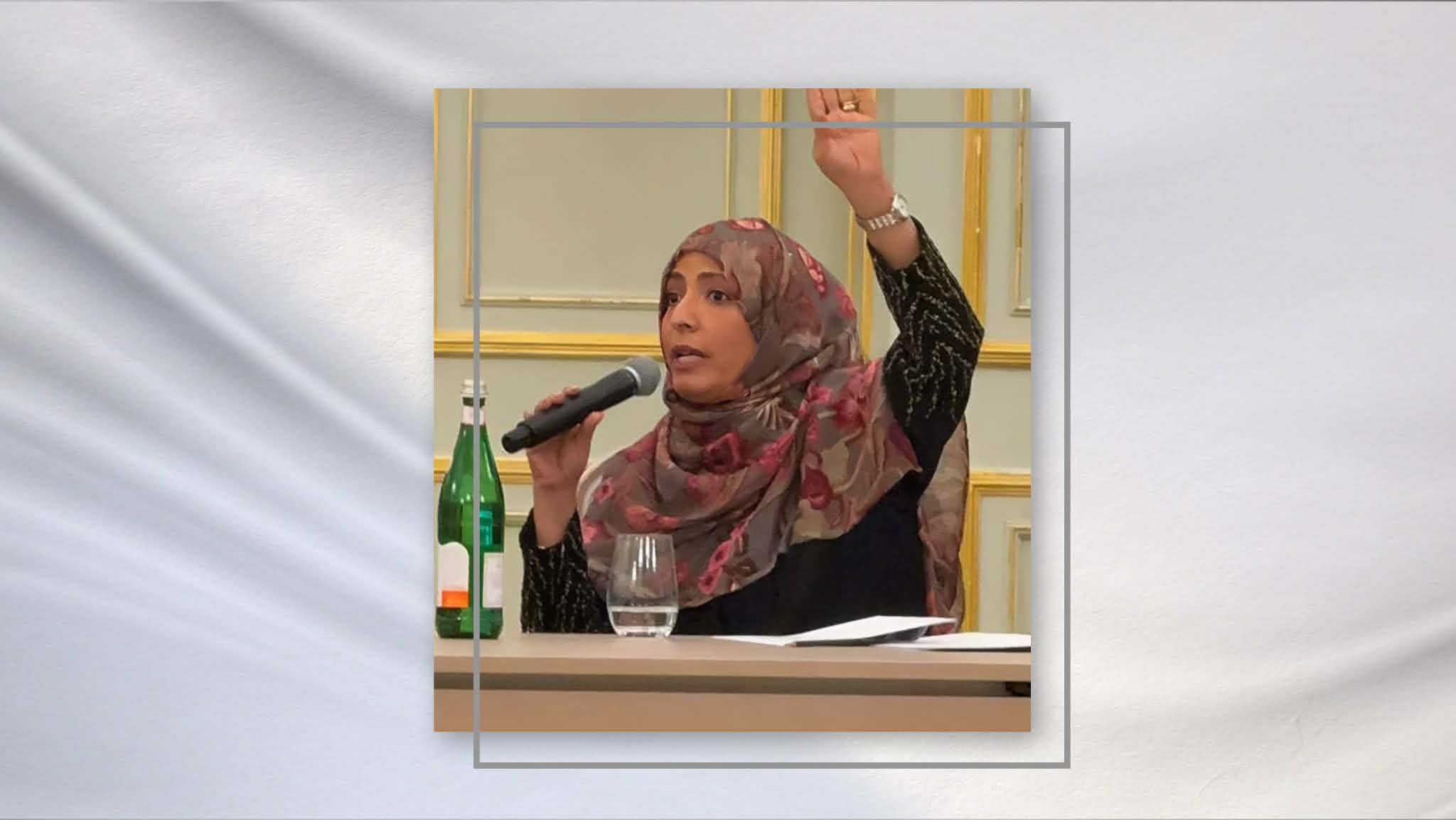
We meet today within the framework of the Women’s Progress Dialogue—an initiative that does not simply measure the condition of women in our world, but seeks to change it. This initiative begins from a truth that we must never compromise: the advancement of women is not a marginal issue, not a secondary reform, and not a domestic concern confined within borders. It is the true measure of justice, the real test of freedom, and the clearest expression of human dignity.
Today we examine indicators that rank nations according to their commitment to women’s rights. Before us stand three realities. There are nations moving forward, striving sincerely toward equality. There are nations retreating, hesitating, and delaying reform. And there are nations that continue to practice discrimination and systematic violations against women.
I hope this index serves as a source of encouragement for advanced nations, a form of pressure on hesitant and regressive ones, and a mechanism of accountability for those that violate women’s rights.
What struck me in this report is its classification of the United Kingdom among advanced nations. This raises a fundamental question: Can a state claim commitment to women’s rights if it protects them domestically while supporting regimes abroad that violate human rights and suppress women’s freedoms?
This standard is flawed and requires reform. A state that supports tyranny, occupation, coups, or repression abroad cannot claim full commitment to women’s rights, regardless of its domestic progress. Women’s rights are indivisible; they cannot be protected at home while being undermined elsewhere.
In this context, I wish to underscore that the struggle for women’s rights transcends the pursuit of token representation within authoritarian or pseudo-democratic structures. It is far more than a quest for empowerment programs alone. At its core, it is a struggle for liberty—for the advancement of democracy, for sustainable development, and for the unwavering observance of the rule of law.
It is a battle for her right to genuine and full political participation, for education, for health, for economic empowerment, and for equality in all aspects of life.
This entire struggle can be distilled into a single word: freedom. And it begins with one central imperative: resisting tyranny—both domestic and global.
This was, and remains, our sacred struggle—we, the women of the Arab Spring. For us, the overthrow of tyranny has been the most effective path to victory for human rights and for women’s rights.
I recall 2011, when a UN official visited Yemen to discuss ways of advancing women’s rights. I told her plainly: the primary battle for Yemeni women is not token representation to decorate a failed regime, but resistance to despotism itself—the system that denied education, deepened poverty, excluded women, and dragged the nation into war. Despotism is their foremost enemy, the root from which all injustice spreads.
Today, we face a dangerous moment in history. Authoritarianism is expanding across the world. A new global tyranny is emerging—one that seeks to erase humanity’s greatest achievements, including the progress women have fought for across generations. It seeks to dismantle international law and replace it with the rule of power. It seeks to replace cooperation with domination, and justice with force.
This system suffers from flaws and shortcomings. For decades it has been plagued by double standards, biased toward powerful nations at the expense of justice, and unable to prevent tyranny and occupation from devastating countries and committing crimes against humanity.
That is why we have always called—and continue to call—for reform, not dismantling. We demand a reformed United Nations with binding resolutions, a reformed Security Council without veto monopolies, and a more just world order—one that champions humanity, rejects oppression, ensures genuine representation for the Global South, and advances social justice and equality worldwide.
This flaw has emboldened despots worldwide, fueling their appetite for destruction, expansion, human rights violations, the theft of popular revolutions, and even the revival of imperial logic that predates the rules-based order.
We must not allow this to happen, and we must unite to confront it. Yet today, this systematic assault on the international order is met with acquiescence—even adaptation—by some democracies, while authoritarian regimes celebrate.
We must stand together, as a global feminist movement and as democrats, against expanding despotism, which has grown stronger since the leadership of this camp shifted from Putin’s Russia to Trump’s America.
This is the gravest threat to humanity, human rights, women’s rights, the environment, the economy, and global peace—especially when the world’s most powerful nation is led by a corrupt, despotic, fascist president.
I am a woman who lived under tyranny, rebelled against it, and helped bring it down. I continue, with courageous leaders across the Arab world, to lead the struggle for freedom, justice, democracy, and peace—confronting counter-revolutions, coups, militias, wars, terrorism, occupation, and the despots who sustain them.
I know tyranny: how it begins, what it feeds on, how it infiltrates power, entrenches itself, and destroys nations, societies, and individuals.
What is happening in America and other democracies—the spread of hatred, racism, division, and polarization—are tools tyrants use to seize and consolidate power. They begin by silencing expression, branding the media an enemy, eroding the rule of law, undermining judicial independence, stripping legislatures of authority, and weakening institutions until they serve only the ruler, his family, and his loyalists.
Donald Trump today stands as a foremost supporter of autocrats and a source of inspiration for fascism. The decline of democracy in democratic nations threatens not only their people but the entire world. When democracy weakens at its center, autocracy strengthens at the margins, and when the world loses its democratic model, hope itself is extinguished.
Women’s rights cannot be safeguarded in a world led by autocrats, nor defended in a system that tolerates oppression, nor achieved without protecting democracy itself. Our struggle, as women, is therefore a struggle to defend freedom, the rule of law, and democracy.
It is vital to support the struggle of the American people—and American women in particular—to protect their democracy and institutions.
We stand with you in your struggle against Donald Trump, affirming that your democracy requires genuine reform—reform that strengthens accountability and prevents thugs, corrupt figures, and abusers from seizing power and hijacking it through the very instruments of democracy. Such reform must correct past mistakes, end policies that empower despots and devastate nations, and restore to democracy its moral meaning and human responsibility.
This is the defining struggle of our time. It is the struggle that will determine the future of women’s rights. It is the struggle that will determine whether humanity moves toward justice or toward domination.
The fight for democracy is the fight for women’s freedom.
The fight for justice is the fight for human dignity.
And the fight for freedom is the fight for the future itself.
Your struggle is our struggle.
Your battle is our battle.
Your freedom is our freedom.
Thank You!
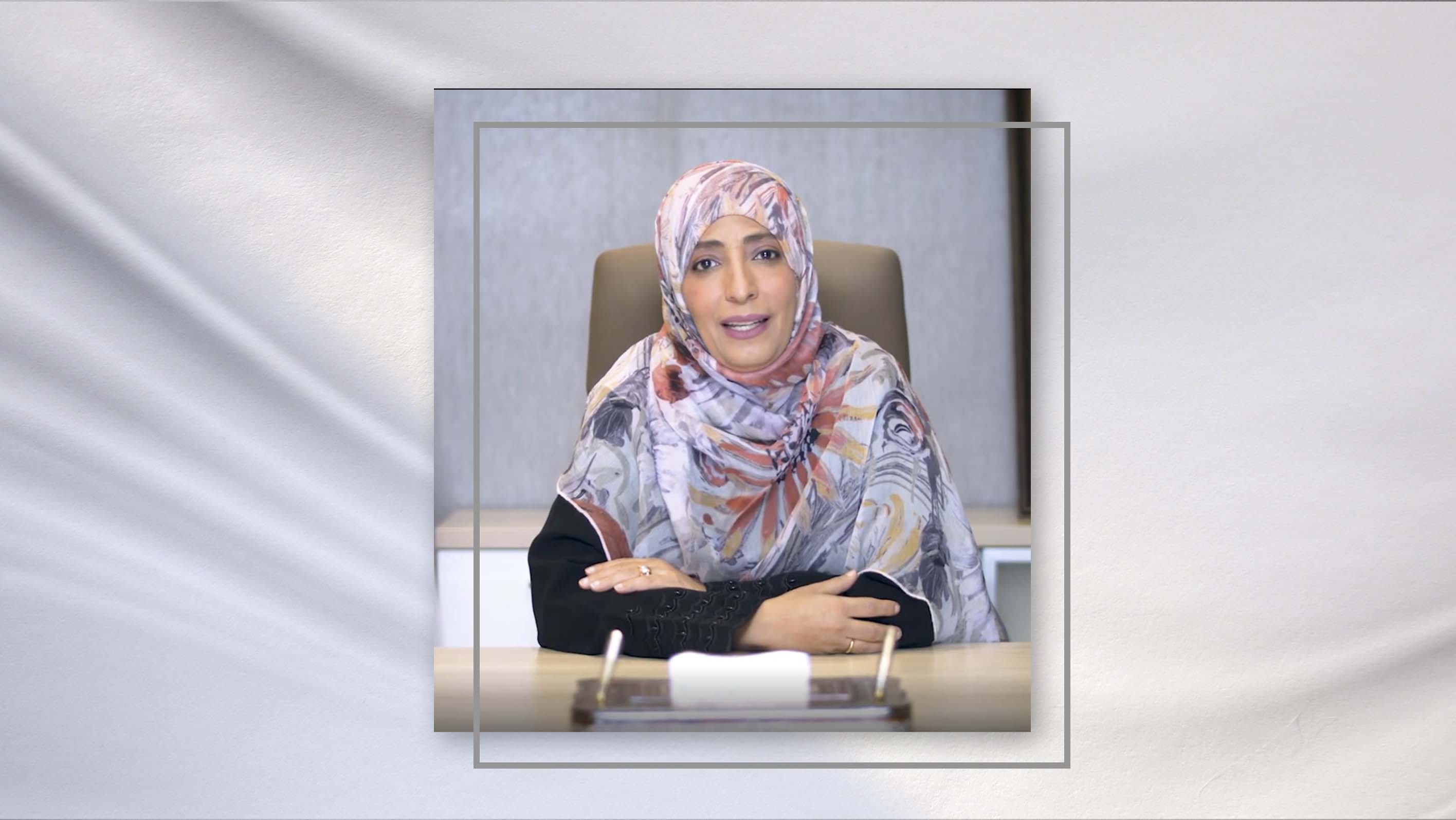
Yemenis, men and women everywhere,
Peace be upon you.
Peace be upon Greater Yemen.
Peace be upon Yemen itself—wounded yet enduring— a land that carries the patience of centuries and the will that does not bend.
Peace be upon every free Yemeni who will neither barter away the homeland nor accept its fragmentation or subjugation.
Peace be upon February and those who remain steadfast in its cause, firm in their convictions and unwavering in their principles.
On this fifteenth anniversary of the February 11, 2011 Revolution, I greet you
not from pride alone, but from the solemn responsibility owed to the present and the future.
That peaceful February Revolution was no transient episode, but a founding moment that laid bare the essence of Yemen’s struggle: between the project of a modern state, anchored in equal citizenship, justice, and the rule of law, and the projects of tyranny, coup, and guardianship, which seek to deny Yemen its freedom and prevent it from standing as a sovereign, independent nation.
Fifteen years have passed since that peaceful uprising, and more than a decade since the militia coup, the war, and the imposed tutelage. Yet February remains: a moral compass, a political standard, a roadmap out of the tunnel of despair, towards peace, justice, and the restoration of the state.
In the Revolution of February 11—youthful in spirit, popular in breadth, and peaceful in purpose—the people of Yemen rose as one, guided by the courage of their youth and the resolve of their women, having grown weary of a state consumed by corruption, tyranny, failure, and dependency.
They envisioned a nation founded on justice, freedom, dignity, partnership, development, and the rule of law. They marched with demands as clear as dawn: a state of institutions, not individuals; a state of law, not weapons.
They chose the path of peace, believing that legitimacy is born from the will of the people, never from coercion or oppression.
The February Revolution was was never a contest for power, but a struggle over the very meaning of the state itself.
It was not about replacing one ruler with another, nor exchanging the state for militias,
nor trading the republic for tutelage.
It was about reclaiming the state, and returning it to its rightful owners: the people.
The revolution erupted after the Yemeni state under Ali Abdullah Saleh reached a profound impasse and institutional collapse.
The state had been hijacked and reduced to a personal fiefdom dominated by one individual, his family, and tribal loyalties, where allegiance replaced governance by institutions.
Public wealth was systematically plundered, corruption became entrenched, the economy deteriorated, and poverty and unemployment surged.
Despite Yemen’s considerable resources and potential, it was classified internationally as a fragile and failing state—an outcome of a regime that converted national institutions into networks serving the ruler and his inner circle rather than the Yemeni people.
Ali Abdullah Saleh ruled by the logic of manufactured crises, by the cold calculus of “divide and rule.” Division, conflict, and war were not accidents, but deliberate instruments for clinging to power.
Violence was no anomaly in his reign— it was the very marrow of his regime. For more than three decades, he led Yemen through unending wars, igniting conflicts, conjuring enemies, and employing terror as a weapon— to silence dissent within, and to blackmail forces without.
Thus justice eroded, and the state itself was hollowed into an entity governed not by law, but by fear.
Despite every attempt at peaceful reform, the doors to change were sealed shut. The deadlock reached its peak when the constitution itself was bent toward extending his rule, followed by a scheme to bequeath power to his son, and to transform the nation’s security and military institutions into the private estate of one man and his family.
This, in a country that had once rejected hereditary imamate rule, and built its identity upon republicanism and democracy. Thus, the betrayal was not only political, but a violation of the very spirit of Yemen’s republic.
Here, the causes of the explosion gathered like storm clouds, and Yemenis lost faith in a state that no longer spoke for them, no longer guarded their dignity, no longer offered them a life of decency.
At that moment, revolution ceased to be a political choice, a matter that could be delayed or bargained. It became instead a historical necessity— the inevitable cry of a people who refused to surrender their future to silence and decay.
The failed, corrupt, and despotic rule of Ali Abdullah Saleh created every condition, every reason, for revolution. Thus, the peaceful February 11th Revolution rose as a profound project of national salvation.
It embodied the moral and political will of the Yemeni people: to reclaim governance as a trust of the people, not an inheritance of the ruler; to rescue the Yemeni state from erosion and collapse— security, political, economic, and social alike; and to rebuild it as a unified, democratic, independent republic.
A republic of institutions, not individuals; of equal citizenship, justice, development, partnership, and good governance. A state worthy of the sacrifices of its people, and of the future awaiting its generations yet to come.
During the peaceful revolution, Yemenis faced a stark choice: violence—the easier path in a country awash with an estimated 70 million weapons—or peaceful struggle, the more arduous and costly road. With deep awareness and a sense of historical responsibility, they chose peaceful resistance as a strategic commitment, not a temporary tactic, fully aware that the regime thrived on violence and sought to provoke it.
Through peaceful resistance, Yemenis stripped the regime of its moral legitimacy, exposing its true nature at home and abroad and revealing its brutality to the world. They believed that only nonviolent struggle could dismantle the legitimacy of injustice, safeguard society, unite diverse communities around a just cause, and open the path toward genuine development, lasting justice, and sustainable peace.
For months, Yemenis answered bullets with chants and violence with patience, steadfast in their peaceful course until they compelled the dictator to relinquish power in November 2011—a triumph of popular will over tyranny.
O great Yemeni people, across our beloved homeland and throughout the diaspora,
Following the victory of the February Revolution and the fall of the regime’s head, Yemen entered a comprehensive transitional phase grounded in inclusion rather than revenge. No political force was excluded, including the ruling party whose leader the revolution had overthrown. Despite serious shortcomings and grave missteps, this period—guided by the spirit of the peaceful revolution, its values, and its forward-looking vision—witnessed genuine and unprecedented achievements.
Just as the February Revolution offered the world a rare example of a great peaceful uprising, it also presented a promising model of governance during the three years of transition. Peace and political engagement replaced violence and war, long used as tools of rule. Fundamental freedoms flourished in an unprecedented climate, most notably freedoms of opinion, expression, assembly, and peaceful protest. Political detentions ceased, leaving no political prisoners during the transitional period. Salaries were raised, major corruption deals were halted, relative economic stability was achieved, and confidence in state institutions began to recover.
The transition also launched an inclusive national dialogue that brought together Yemenis from north to south and east to west. It addressed the country’s most pressing challenges and aspirations, including the structure of the state, transitional justice, economic reform, rights and freedoms, military restructuring, and the Saada and Southern issues. This dialogue produced a national document outlining consensus outcomes and a progressive draft constitution—one capable of transforming Yemen into a state founded on rights and freedoms, equal citizenship, accountability, participation, and the rule of law, paving the way for a peaceful transition to a modern state.
Yemen stood only days away from a constitutional referendum and a democratic transition through free elections when the ousted president, Ali Abdullah Saleh—driven by vengeance against his people and hostility to the very idea of a Yemeni state—formed an alliance with the Houthi militia, a dynastic, imamate-based movement. This alliance constituted one of the gravest acts of betrayal against the Yemeni state and a direct coup against the republic, marking a historic crime against Yemen’s democratic aspirations.
On September 21, 2014, the counter-revolutionary alliance struck— an unholy union of Ali Abdullah Saleh, bolstered by Emirati support and tacit Saudi approval, and the Houthi militia, armed with Iranian backing. Together they staged a coup against the peaceful revolution and its fragile transitional process. The government was besieged, the draft constitution silenced, state institutions seized, and the capital, Sana’a, fell.
Ironically, the counter-revolutionary states—Iran, Saudi Arabia, and the UAE— despite their contradictions and rivalries, found common cause in a single objective: to abort the birth of a modern, independent Yemeni state. Their hostility was not born of Yemen’s weakness, but of its impending strength, its immense potential. They feared a Yemen that could rise as a democratic republic, anchored in the will of its people, and empowered by its strategic location, its vast coastline and islands, its wealth of oil, gas, gold, and minerals, and above all, the resilience and capacity of its people to build, innovate, and invest.
For these powers, an independent and sovereign Yemen would have been a force in the region— a reality they could not welcome, nor could larger global actors who preferred Yemen fragile, ruled by dictators or militias, rather than by its own free institutions.
Thus the counter-revolution aborted a transitional phase that had followed a great peaceful uprising— a revolution that had brought rights, freedoms, and a measure of stability. In its place, they delivered war, chaos, and collapse. Their victory is hollow, temporary. For the meaning of February has not been defeated; rather, the depth of fear it inspired has been revealed.
Revolutions are not measured by the moment they are overthrown, but by their endurance as living ideas, as moral values, as compasses for the future.
February endures— a living idea, a guiding star, a promise that will be fulfilled, however long the journey may take.
O great people of Yemen,
The unspoken pact among the counter-revolutionary forces and their patrons was to confine the Houthi–Saleh coup to Sana’a and the northern reaches. Yet when their expansion pressed southward toward Aden, the red line was crossed, and Yemen was plunged into full-scale war.
In March 2015, the Arab Coalition—led by the Kingdom of Saudi Arabia—intervened under the banner of restoring legitimacy and preventing the collapse of the state. But what began as a promise of salvation soon transformed into a Saudi–Emirati alliance that strayed from its declared purpose. It did not restore the state; it dismantled it. It did not empower legitimacy; it weakened it. It did not confront the Iranian-backed Houthi militia; it raised parallel militias in liberated lands, beholden not to Yemen, nor to its institutions, but to foreign powers.
Thus, the institutions of the state were paralyzed, stripped of authority, and hollowed out. Over ten years of coup and war, the suffering of Yemenis has been compounded—not only by the Houthi takeover, but by the coalition’s deviation into a struggle for power and territory.
Today, under competing authorities, Yemenis endure one of the world’s gravest humanitarian crises:
• a collapsed economy,
• paralyzed institutions,
• a currency in freefall,
• services reduced to shadows,
• and millions living under oppression, hunger, and the absence of protection and rights.
In this context, the Emirati role emerged as the most perilous to the trajectory of the Yemeni state, the most prominent in its dismantling and destruction— a danger we had long forewarned.
This role was neither accidental nor fleeting, but part of a deliberate, comprehensive project to re-engineer Yemen—security-wise, politically, and militarily— in ways that serve Emirati and foreign interests.
From the very first moment of war, the UAE seized ports, islands, airports, coastlines, and oil and gas sites. It focused on militarizing the south, constructing separatist entities, and raising armed militias parallel to the state.
Thus, its role shifted: from supporting legitimacy to undermining it, from confronting the coup to orchestrating parallel coups, from defending unity to pushing for division— between a dynastic, coup-born authority in the north, and separatist militias in the south.
As this project expanded into Hadramawt and Al-Mahra, the Saudi–Emirati dispute erupted into open conflict. What had once been simmering tensions now flared into confrontation, after the Southern Transitional Council militia, backed by the UAE, invaded Hadramawt and Al-Mahra.
At that moment, Emirati expansion became a direct threat to Saudi national security. For Hadramawt is not merely a Yemeni province of strategic weight— it is a security depth for the Kingdom, an advanced line of defense for its stability. Thus Saudi Arabia intervened decisively, ending the Emirati military role, removing it from the Yemeni equation, and effectively expelling it from the battlefield.
Yet Hadramawt revealed more than a clash of arms. It exposed the truth that Yemen’s war was never simply an internal struggle between “legitimacy” and “coup.” It was, and remains, an arena of regional competition over territory and influence. It showed that chaos in Yemen is not a mere byproduct of war, but a deliberate instrument of power. Partition was not accident, but policy— a calculated design within a broader regional conflict.
What unfolded in Hadramawt was also an implicit admission: that dismantling Yemen, as rejected by its people, is no longer an acceptable option for Saudi and regional interests. But unless the course is corrected— unless the national state is empowered— the cost of chaos will not remain confined within Yemen. It will spill across the region, threatening its security and stability, and foremost among them, the security of the Kingdom of Saudi Arabia.
Here I address a message to Saudi Arabia:
Today, with the UAE expelled from the coalition and its destructive projects curtailed, a genuine horizon for peace begins to unfold. The picture is clearer: a recognized Yemeni state, supported by the Kingdom, standing against the Iranian-backed Houthi militia. This clarity opens a historic window—one through which the state may be restored and the coup brought to an end.
The swift victories in Hadramawt, Al-Mahra, and Shabwa, culminating in the liberation of Aden, were not passing moments. They instilled deep confidence among Yemenis in a serious Saudi shift—toward restoring the state and safeguarding its territorial integrity. This confidence is the most vital element for any future campaign, whether political or military.
By the same logic, Sana’a too can be liberated if this momentum continues. In this moment, a rare opportunity arises: to fully restore the Yemeni state, serving both Yemen’s destiny and the security of Saudi Arabia and the Arab world. With Iran’s waning reach and Saudi Arabia’s growing strength, the choices are stark:
• Either a comprehensive peace—built on disarming the Houthis, ensuring independent national decision-making, and integrating them as an unarmed civilian component of political life;
• Or a decisive victory that retakes Sana’a, establishes a unified state, and ushers in a political process free of weapons.
The gravest danger lies in remaining suspended between war and peace. The worst path is hesitation: transferring militias from Emirati to Saudi sponsorship, or dividing Yemen into spheres of influence. Such policies recycle chaos instead of resolving it, and grant the Houthis time to rebuild, to cloak themselves in the rhetoric of sovereignty and unity, and to expand under the guise of the state.
There is no path to lasting peace, nor to making Yemen a cornerstone of regional security, except by fully supporting the legitimate government, unifying forces under its command, providing genuine economic backing, empowering institutions to govern liberated areas, and advancing steadily toward Sana’a—peacefully if possible, decisively if necessary.
This is no posture, no mandate for any faction. It is a clear equation: a unified and strong Yemen is a strategic depth for its neighbors, while a fragmented Yemen will remain a source of drain and instability for the entire region.
A Message to the Yemeni Political Elite:
Our nation is wounded, and our people have borne a heavy price. To abandon the task of rescuing them is not merely negligence—it is a moral and historical betrayal. The current authority must restore the credibility of institutions and the very meaning of the state, presenting in the liberated areas a model worthy of respect. Parliament must convene, oversight must be exercised, and legitimacy must no longer remain beyond accountability.
Build a successful model in the liberated lands, and the Houthis will fall. There are no excuses left. Either correct your course or step aside. Neither you nor the Houthis are destiny imposed upon the Yemeni people. We stand with you so long as you stand with the Republic, unity, and the people’s supreme interests; we will stand against you if you deviate, corrupt, or betray.
End weapons outside the state’s command. Dismantle militias beyond its authority. Halt the war economy. Reject foreign tutelage. Present a genuine model in the liberated areas—one that secures citizens, delivers services, and manages public funds transparently.
Only then will peace be born as the natural fruit of state-building— not as a fragile truce, but as a lasting covenant, shielding Yemen from the return of war.
Finally, free Yemenis,
In recent years, politics has been marginalized, stripped of its national responsibility, and turned into a reprehensible act—blocking the government from addressing public affairs. This crime opened the gates to violence, militias, and obscurantist agendas. When politics is silenced, weapons rule; when debate is suppressed, extremism advances and chaos spreads.
We must therefore guard against demonizing political action, parties, elections, democracy, and accountability. Closing the public sphere serves only militias and narrow factions.
Despite the brutality of coup and war, Yemen’s conflict has remained political—about power and the meaning of the state—not sectarian or ethnic. This reflects the awareness and cohesion of Yemeni society, a source of pride and strength. Yemen has not been defeated, for nations fall only when they lose their moral compass. Yemenis have preserved theirs, along with the idea of homeland and the dream of a state.
Peace is possible because society remains unbroken, and Yemenis have shown both the will and capacity to achieve it. This is why they rose in February, why they endured, and why their project remains alive.
February has not ended. It is not a date, but a compass. The further we stray from it, the more lost we become; the closer we return to its values, the nearer we are to salvation.
Glory to the martyrs.
Freedom for the detainees.
Dignity for all Yemenis.
Victory for a just, unified, democratic republic.
Glory to the great republican Yemen.
May God have mercy on the martyrs, and heal the wounded.
Peace be upon you, and God’s mercy and blessings.
To begin, I would like to express my delight at being part of this forum, which serves as a vital...
Ladies and Gentlemen,
In the name of God, the Most Compassionate, the Most Merciful.