
Wjwc News
Jordan: Prison Overcrowding and Detention of Activists Raise Human Rights Concerns
Amman, Jordan – February 9, 2026 — Women Journalists Without Chains has warned that recent remarks by Jordan’s Interior Minister acknowledging severe prison overcrowding highlight the urgent need for comprehensive reform of detention policies. The organization stressed that the minister’s statements reinforce longstanding concerns regarding the treatment of detainees, particularly individuals held for exercising their legitimate right to freedom of expression.
Government Acknowledgment of Overcrowding
In late January, Interior Minister Mazen Al-Faraya stated during a parliamentary session that the ministry seeks to reduce the number of detainees in correctional and rehabilitation centers, acknowledging that prisons suffer from acute overcrowding. Women Journalists Without Chains noted that the minister’s remarks align with available figures and media reports indicating that Jordan’s prison population exceeds 20,000 inmates, with some facilities operating at approximately 163 percent above their designed capacity.
Human rights advocates warn that such overcrowding creates conditions that may compromise detainees’ health and safety, including limited access to adequate medical care, deteriorating sanitation, and increased risk of ill-treatment. The organization emphasized that overcrowding also undermines detainees’ access to legal protections and humane detention standards guaranteed under international human rights law.
Public Outrage Over Detainee Cases
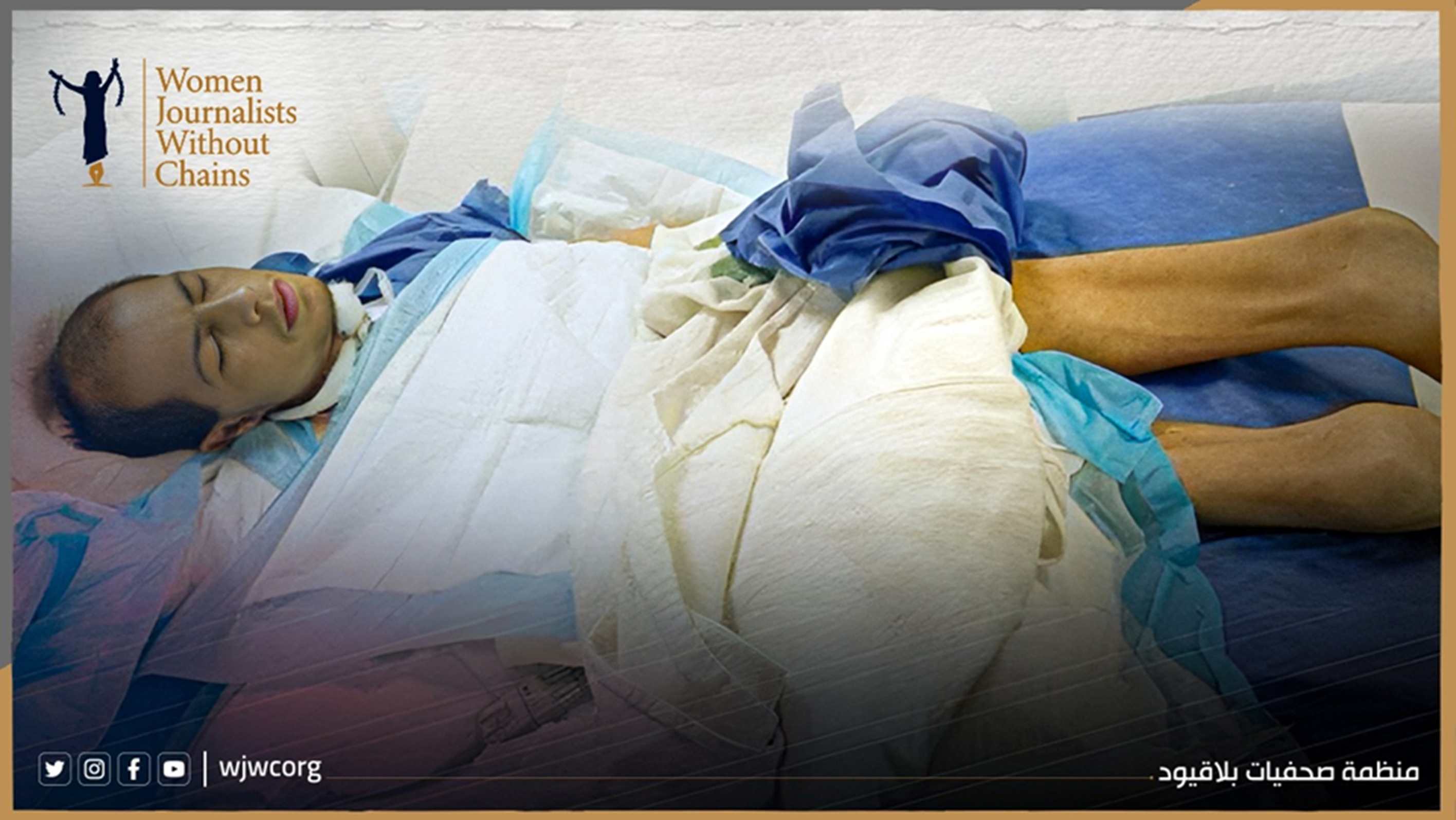
Public concern intensified following the circulation of images showing engineer Daham Al-Amoush in critical health condition. Al-Amoush has remained in intensive care at Al-Bashir Hospital in Amman for several months after reportedly suffering blood poisoning that resulted in coma and severe brain damage.
Authorities arrested Al-Amoush in 2024 following a personal dispute before reclassifying his case as attempted murder and subsequently categorizing him under state security charges. Media reports indicate that his detention may also relate to social media posts expressing solidarity with Gaza and opposition to Israeli military operations. Al-Amoush later launched a hunger strike to protest his detention, which reportedly contributed to the sharp deterioration of his health.
His brother, Bassam Al-Amoush, stated publicly that Daham has lost consciousness and eyesight and now suffers extensive neurological damage, describing his condition as “skin and bones.” He further accused authorities of misleading the family regarding Daham’s whereabouts, characterizing the case as an enforced disappearance and a serious human rights violation.
Women Journalists Without Chains stated that Jordanian authorities have increasingly targeted activists, journalists, and civilians for expressing solidarity with Palestinians in Gaza and protesting against actions attributed to Israeli forces since October 2023, which, according to the Palestinian Ministry of Health in Gaza, have resulted in more than 72,000 deaths as of February 7, 2026.
Harsh Sentences and Legal Concerns
The organization also highlighted the case of detainee Ayman Sandouqa, arrested in December 2023 after sending a letter to King Abdullah II urging him to take a stronger position against Israeli military actions. Despite a recommendation from the Court of Cassation to amend the charge against him, the State Security Court sentenced Sandouqa to five years in prison on charges of “attempting to undermine the regime.” His family maintains that he sought only to exercise his right to peaceful expression and to obtain a fair trial.
In July 2025, Sandouqa’s sister, Inshirah, reported receiving threats from intelligence services demanding her appearance and warning of potential referral to the cybercrime unit. She reaffirmed her determination to advocate for her brother’s release and rejected what she described as policies aimed at silencing dissent. In September 2025, the State Security Court upheld Sandouqa’s five-year sentence, disregarding the Court of Cassation’s recommendation to reduce the charge to a misdemeanor.
Women Journalists Without Chains stressed that dozens of Jordanians remain detained without adequate fair trial guarantees. The organization noted that authorities increasingly prosecute individuals under the Cybercrime Law or refer cases to the Counter-Terrorism Law No. 55 of 2006, raising concerns about the use of broadly defined legislation to restrict peaceful expression.
Legal Framing and NGO Condemnation
Women Journalists Without Chains emphasized that such practices violate Article 15 of the Jordanian Constitution, which guarantees freedom of opinion and expression and permits restrictions only within narrowly defined legal parameters. The organization further stressed that these measures contravene Jordan’s obligations under the International Covenant on Civil and Political Rights, particularly Articles 9, 14, and 19, which protect individuals from arbitrary detention, guarantee fair trial rights, and safeguard freedom of expression.
The organization condemned arbitrary detention, alleged medical neglect, and intimidation targeting detainees’ families, warning that these practices undermine Jordan’s constitutional commitments and international human rights obligations.
Call to Action
Women Journalists Without Chains urged Jordanian authorities to:
- Immediately release all prisoners of conscience and end harassment targeting activists, journalists, and civilians for peacefully expressing their views.
- Implement urgent measures to address overcrowding in detention facilities and ensure humane and dignified detention conditions.
- Guarantee prompt and adequate healthcare for detainees and end any practices involving medical neglect or ill-treatment.
- Ensure detainees’ full legal rights, including access to legal counsel and communication with family members.
- End arbitrary detention, particularly of individuals detained for peaceful expression.
- Subject detention centers to independent judicial oversight and allow national and international human rights organizations to conduct monitoring visits to ensure transparency and accountability.