
Wjwc News
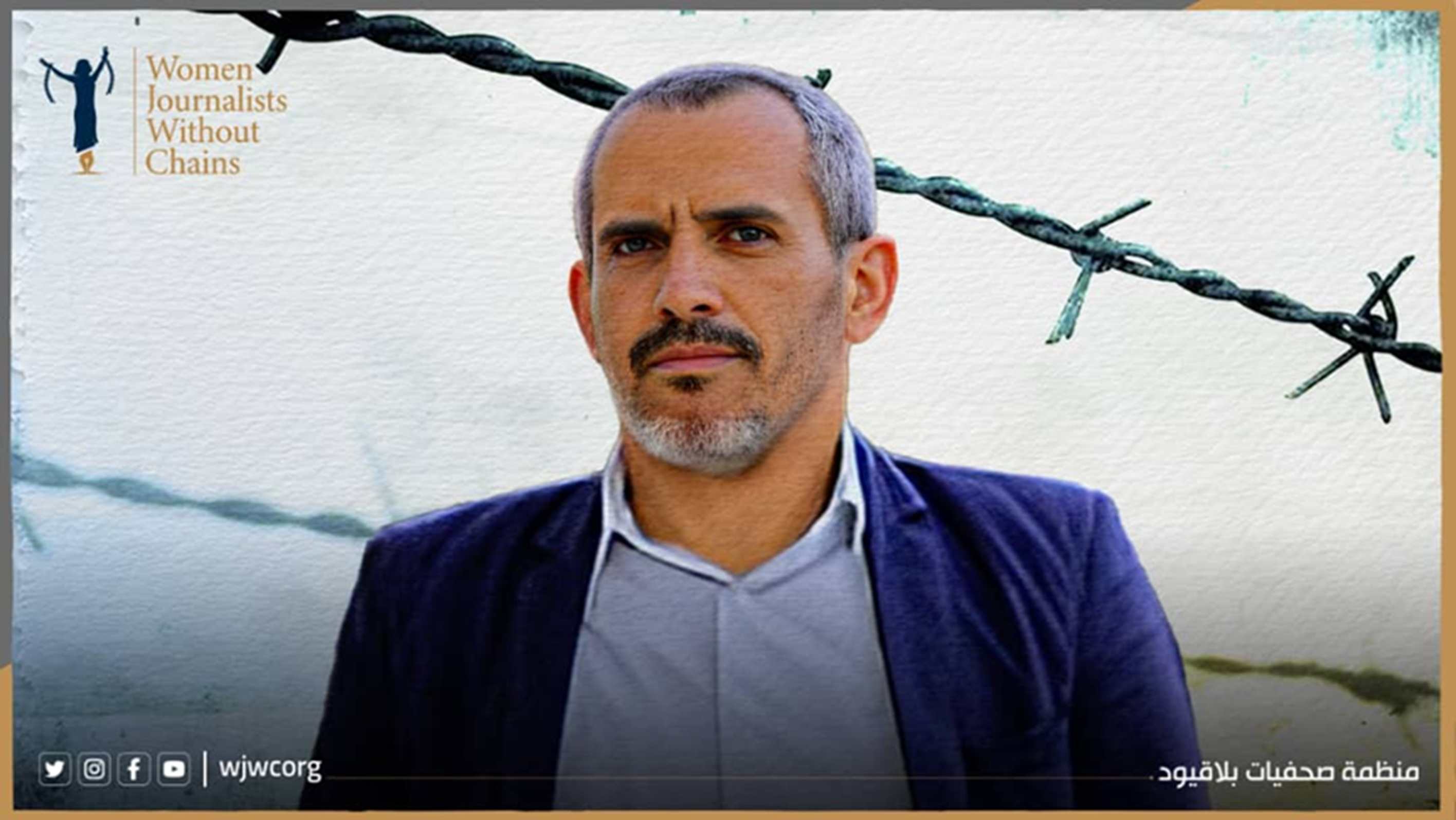
Yemen: Arbitrary Detention of Lawyer Sabra and Retaliatory Threats Against Family Members
The ongoing arbitrary detention of lawyer and human rights defender Abdulmajid Sabra by Houthi militia forces, more than eight months after his abduction from his legal office in Sana’a on 25 September 2025,
raises serious concerns regarding the rule of law and the protection of legal professionals in Yemen. The detention was carried out without judicial warrant, legal basis, or access to due process, and has been accompanied by explicit threats directed at family members engaged in peaceful advocacy for his release.
The militia authorities transferred Sabra through multiple detention facilities before moving him to the Security and Intelligence Prison in the Sarf district, where he remains detained without charge, trial, or judicial review. In protest against the denial of his basic rights and the absence of legal proceedings, he undertook two hunger strikes. He suspended the first due to a serious deterioration in his health, and the second only after receiving assurances that his case would be reviewed and his grievances addressed. Those assurances have not been honored.
Family members face explicit threats for demanding Sabra’s freedom. Authorities have even threatened one of his brothers with detention if the family continues to speak out. Targeting relatives to silence a detained individual is a blatant act of reprisal against lawful free expression.
Several months into his detention, Sabra's release was conditioned upon his formal renunciation of the legal profession and his cessation of human rights defense work. Under duress of prolonged arbitrary imprisonment, he acquiesced to these conditions. His release was not effected, demonstrating the use of detention as an instrument of coercion and professional extortion.
Conditions of Detention and Health
The critical health conditions resulting from prolonged arbitrary detention and repeated hunger strikes — undertaken in protest against the absence of due process and the denial of basic rights — demand immediate attention. The transfer of Sabra to the Security and Intelligence Prison in the Sarf district, following successive moves between multiple detention sites, underscores the urgent necessity to respect humanitarian and health considerations in accordance with international standards for the treatment of prisoners.
Institutional Position
The arbitrary detention of lawyer Abdulmajid Sabra constitutes a serious violation of due process guarantees and undermines the independence of the legal profession. Threats and punitive measures directed at family members, together with efforts to condition release upon the abandonment of a lawful profession, further compound the violation through acts of coercion and reprisal. The use of arbitrary detention to suppress lawful advocacy weakens public confidence in the rule of law and restricts fundamental freedoms. Immediate corrective measures are required to ensure compliance with constitutional guarantees and international human rights obligations.
Demands Aligned with International Human Rights Principles
|
Demand |
International Legal Principle |
|
Immediately and unconditionally release lawyer Abdulmajid Sabra from arbitrary detention |
The Right to Liberty and Security of Person; Prohibition of Arbitrary Detention (ICCPR Art. 9; UN Basic Principles on the Role of Lawyers) |
|
Cease all threats, intimidation, and retaliatory measures against Sabra's family members |
The Right to Freedom of Expression and Protection Against Reprisal (Declaration on Human Rights Defenders, Arts. 9, 12) |
|
Guarantee that Sabra will not face further punitive measures, professional sanctions, or pressures linked to his prior human rights and legal defense work |
The Independence of Lawyers and Prohibition of Coercion (UN Basic Principles on the Role of Lawyers; Declaration on Human Rights Defenders, Art. 1) |
|
Conduct an independent and impartial investigation into the circumstances of Sabra's abduction, detention, and the threats directed at his relatives, and ensure accountability for those responsible |
The Right to an Effective Remedy and Accountability for Violations (ICCPR Art. 2; Basic Principles and Guidelines on the Right to a Remedy and Reparation) |
|
Ensure full compliance with international standards regarding the independence of lawyers and the protection of human rights defenders in all territories under Houthi control |
The Obligation to Respect and Ensure Rights; Independence of the Legal Profession (ICCPR Art. 2; UN Basic Principles on the Role of Lawyers; Declaration on Human Rights Defenders) |
|
Allow international human rights mechanisms, including relevant United Nations special procedures, unfettered access to monitor conditions of detention and conduct independent assessments |
The Right to Humane Treatment in Detention and International Monitoring (ICCPR Art. 10; UN Standard Minimum Rules for the Treatment of Prisoners — Nelson Mandela Rules, Rules 24–35) |
Released by:
Women Journalists Without Chains
Geneva, Switzerland — June 19, 2026