
Wjwc News
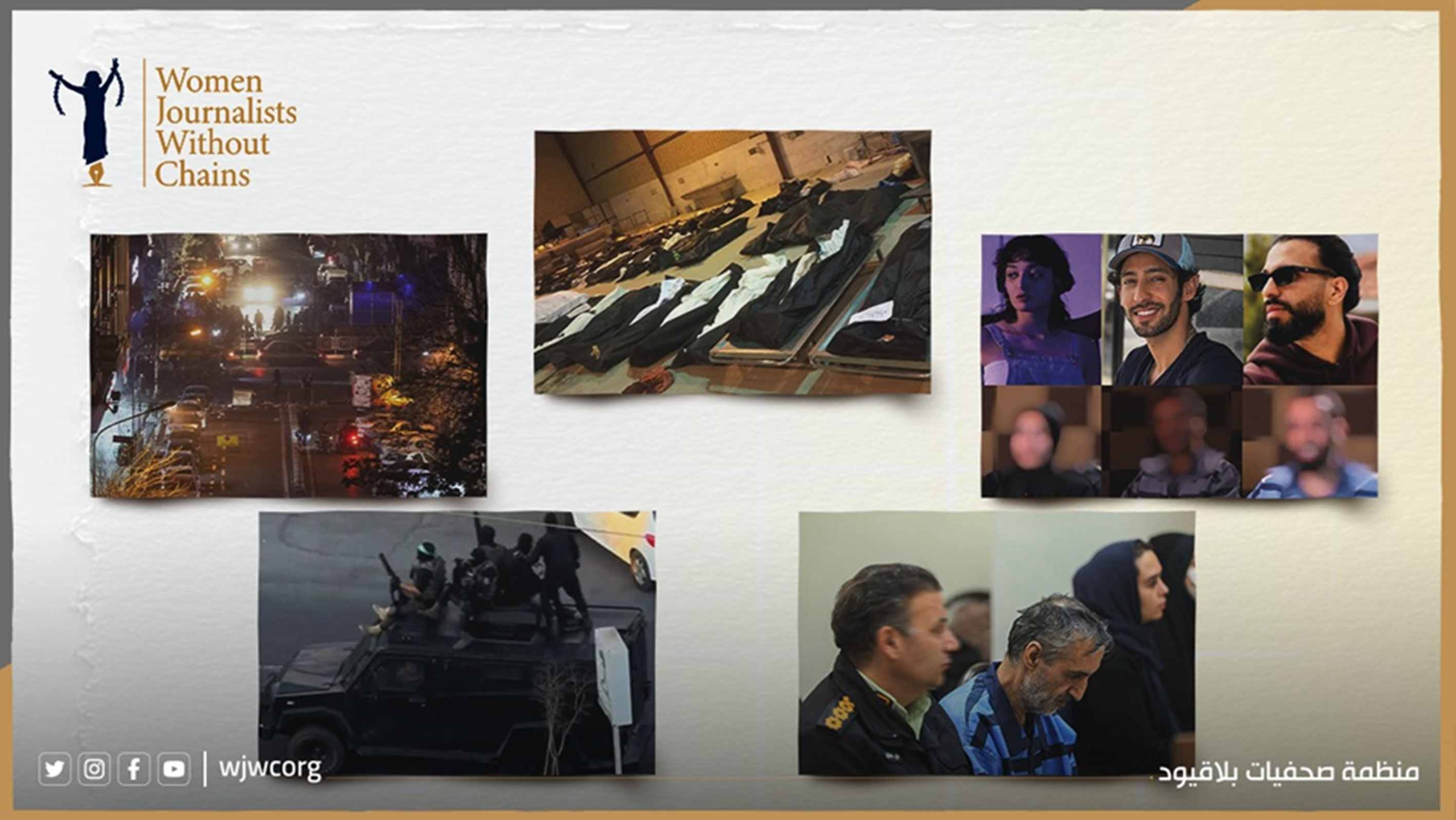
Deadly Repression in Iran: Killings and Sweeping Arrests
Reports compiled by Women Journalists Without Chains (WJWC) indicate a severe deterioration in the human rights situation across Iran since the beginning of 2026, with thousands of protesters reportedly killed, tens of thousands detained, and sweeping restrictions imposed on communication and access to information.
The organization states that documentation gathered from multiple Iranian provinces points to a coordinated and large-scale campaign of repression against demonstrators and perceived dissenters.
According to documentation reviewed by WJWC, incidents of violence linked to the authorities’ response to protests have been recorded across 31 Iranian provinces. As of 6 February 2026, aggregated field documentation compiled by civil society monitors indicates that more than 6,000 people have been killed and over 50,000 individuals detained. Independent monitoring networks cited by WJWC, which rely on victim registries, eyewitness testimony, and hospital records, estimate the death toll to be closer to 6,900, including at least 156 children. In contrast, reporting by United Nations mechanisms — based on verified cases meeting strict evidentiary thresholds — indicates that at least 5,000 fatalities have been confirmed. Official Iranian figures, which include both civilians and members of security forces, acknowledge 3,117 deaths, including approximately 300 security personnel. WJWC notes that the variation in figures reflects differeشnces in documentation methodologies, access to affected areas, and ongoing restrictions on independent monitoring and information flows within the country.
The unrest reportedly intensified following protests that began in late December 2025, with demonstrators raising grievances related to governance, economic hardship, and political freedoms. Documentation collected by WJWC, including video footage, photographs, medical testimonies, and eyewitness accounts, indicates that security forces deployed lethal force against crowds described as largely unarmed and peaceful.
Reports of Lethal Force and Mass Casualties
WJWC states that it has reviewed extensive visual evidence showing Iranian security forces firing live ammunition into crowds of demonstrators. The organization reports that lethal force was used repeatedly beginning on 8 January 2026, with some of the most severe incidents reportedly occurring on 8 and 9 January, when several major cities experienced large-scale violence. Victims were reportedly shot in the head and upper body, consistent with patterns associated with intentional lethal targeting.
The organization documented the deployment of Revolutionary Guard units operating in residential neighborhoods, including heavily armed personnel using machine guns mounted on civilian vehicles. In one hospital in Isfahan alone, medical sources reportedly recorded approximately 500 gunshot victims by 10 January.
Medical reports and eyewitness testimonies reviewed by WJWC also indicate the use of metal-pellet shotgun ammunition fired at close range, causing widespread facial injuries and permanent blindness. The organization notes that similar weapons were used during the 2022 protests known as the “Woman, Life, Freedom” demonstrations, which resulted in numerous cases of severe eye injuries among protesters.
In addition to the use of lethal force, WJWC reports evidence that authorities attempted to conceal the scale of casualties. Documentation reviewed by the organization suggests that victims’ bodies were sometimes transported using refrigerated food storage vehicles, while families were reportedly pressured to pay substantial sums in exchange for receiving their relatives’ remains. Some families were allegedly required to sign statements identifying deceased relatives as members of state-affiliated militias.
The organization further reported credible accounts of secret burials and the use of mass graves in some locations, including the city of Mashhad. Such practices, if confirmed, would raise serious concerns regarding efforts to obstruct independent investigations and accountability processes.
Mass Arrests, Accounts of Torture, and Digital Blackout
WJWC reports that by the 40th day of protests, which began on 28 December 2025, at least 51,251 individuals had been detained. According to the organization, more than 40,000 detainees are believed to be held in prisons, unofficial detention centers, or facilities controlled by the Islamic Revolutionary Guard Corps and intelligence agencies.
Those detained reportedly include students, teachers, workers, activists, and unemployed individuals. WJWC states that many arrests appear to have been carried out without warrants or judicial oversight. The organization also reports that detainees have frequently been held incommunicado, without access to legal counsel or family contact.
Testimonies collected by WJWC describe credible reports of torture and ill-treatment, including beatings, electric shocks, mock executions, and suspension by wrists or neck restraints. Survivors and witnesses have also provided accounts of sexual violence against detainees, including women, men, and minors, reportedly used to coerce confessions.
The organization highlights several individual cases that it says illustrate broader patterns of coercion. One case involves a two-year-old child reportedly killed by a gunshot wound during protests in Neyshabur. WJWC reports that state media later broadcast footage of the child’s father appearing to attribute responsibility to armed groups while allegedly receiving instructions from unseen individuals.
Another documented case involves Mohammad Abbasi, a 55-year-old man reportedly sentenced to death based on surveillance footage that allegedly failed to conclusively identify him, alongside confessions reportedly obtained under duress. The organization also cited the case of a 17-year-old minor who appeared in recorded footage expressing confusion about charges carrying potential capital punishment.
WJWC states that these cases demonstrate systemic deficiencies in judicial procedures and raise concerns regarding due process and fair trial rights.
Authorities have also imposed extensive restrictions on internet and telecommunications access during the protests. According to WJWC, the restrictions have effectively isolated Iran’s population of more than 90 million people from external communication channels, limiting the ability of victims and witnesses to share evidence or seek assistance.
The organization additionally reports that at least 24 journalists have been arrested in connection with reporting on the protests, alongside lawyers and human rights defenders. Victims’ mobile phones have reportedly been confiscated to prevent documentation of abuses.
Judiciary and Escalation of Executions
WJWC reports that Iran has experienced a sharp rise in executions in recent years. The organization states that more than 2,000 executions were carried out in 2025 alone and alleges that authorities have intensified the use of capital punishment against individuals linked to protest activities.
According to WJWC, protesters have frequently been charged under broadly defined national security laws, including charges such as “enmity against God.” The organization reports credible incidents of secret executions inside detention facilities, including the case of a 33-year-old sports trainer reportedly arrested in Mashhad in January 2026 and allegedly executed without formal notification to his family.
The organization notes that amendments introduced to Article 48 of Iran’s criminal procedure law restrict defendants accused of national security offenses to government-approved lawyers. WJWC states that this restriction has significantly limited independent legal representation and contributed to arrests of several defense lawyers.
Reports of Militarization of Medical Facilities
WJWC also reports credible accounts that security forces have used hospitals as sites for arrests and surveillance. Medical personnel interviewed by the organization described orders to deny treatment to injured protesters in certain areas. Testimonies reviewed by WJWC include reports that life-support equipment was withdrawn from some patients, resulting in deaths.
The organization states that hospitals in several cities were reportedly raided by security forces seeking patient records and financial data. WJWC reports that at least 40 medical professionals have been detained, including infectious disease specialists and emergency physicians accused of assisting injured demonstrators.
According to the organization, fear of arrest has reportedly discouraged medical volunteers from treating wounded protesters, forcing some injured individuals to seek unsafe underground medical care.
NGO Condemnation and Legal Assessment
Women Journalists Without Chains condemned the documented actions as grave violations of international human rights law. The organization states that the widespread use of lethal force against civilians, mass arbitrary detentions, torture, enforced disappearances, and denial of medical care may constitute crimes against humanity under international law.
WJWC President and Nobel Peace Prize laureate Tawakkol Karman stated that the developments unfolding in Iranian cities represent a dangerous and violent retreat from political accountability. She said that while some Iranian officials initially adopted conciliatory rhetoric in response to the growing protests, authorities quickly shifted to the use of excessive and brutal force against largely unarmed civilians, actions she described as potentially amounting to crimes against humanity.
Karman further warned that documented incidents of hospitals being used to deny or obstruct treatment for injured protesters, alongside reports of minors facing capital charges linked to protest activity, highlight the gravity of the situation. She stressed that expressions of diplomatic concern alone are insufficient, describing the crisis as a critical moral test for the international community. She added that continued global inaction risks enabling further violence, with young Iranians paying the price through killings on the streets and executions following protest-related prosecutions.
The organization further emphasized that threats of foreign military intervention cannot justify violations of fundamental human rights obligations. WJWC stated that all governments remain bound by international legal standards, including obligations under the International Covenant on Civil and Political Rights, which guarantees the right to life, fair trial, and protection from torture.
Broader Context of Repression
Human rights organizations have documented recurring cycles of protest and state repression in Iran over the past decade. Major protest movements, including demonstrations in 2019 and 2022, were met with significant use of force and large-scale arrests.
WJWC notes that current patterns mirror earlier documented violations, including internet shutdowns, mass detentions, and lethal crowd-control tactics. The organization states that the scale and intensity of reported violations in early 2026, however, appear to exceed previous protest crackdowns.
Calls for International Action
Women Journalists Without Chains called on Iranian authorities to immediately halt executions, release individuals arbitrarily detained in connection with protests, and restore access to internet and communication services. The organization also urged authorities to guarantee independent investigations into alleged human rights violations and to allow international monitoring mechanisms to operate without obstruction.
The organization called on the international community to support ongoing United Nations fact-finding efforts and to pursue accountability through universal jurisdiction mechanisms targeting individuals responsible for serious violations. WJWC urged governments to consider targeted sanctions against officials implicated in human rights abuses and to increase diplomatic pressure to halt executions and disclose the fate of individuals subjected to enforced disappearance.
The organization also called for international investigations into reports of medical facility militarization and attacks on healthcare workers, emphasizing the need to protect journalists, lawyers, and medical professionals documenting abuses.
WJWC stated that addressing the ongoing crisis requires coordinated international engagement to ensure accountability, protect fundamental rights, and support independent civil society actors working to document violations within Iran.