
Wjwc News
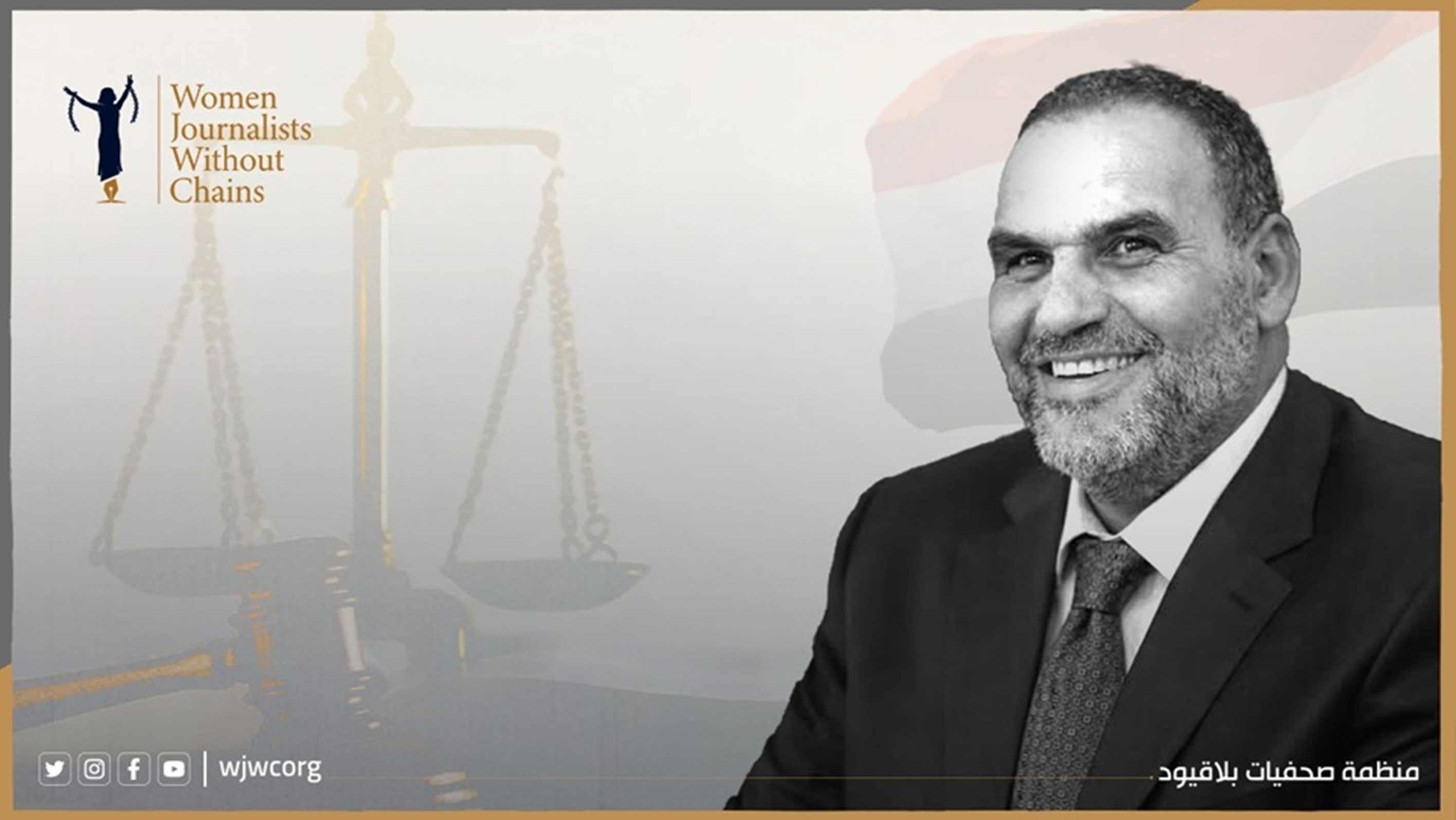
Behind Bars, Beyond Justice: The Case of Shams al-Din Ahmed Atta Allah in Egypt
The Egyptian authorities bear full responsibility for the death of human rights lawyer Shams al-Din Ahmed Atta Allah, who died inside Tenth of Ramadan Prison after years of arbitrary detention and the deliberate denial of necessary medical care. His death constitutes a grave violation of the right to life and reflects a broader pattern of systematic abuse and impunity within Egypt’s detention system.
Shams al-Din Ahmed was arrested in November 2021 solely because of his work defending political detainees and prisoners of conscience. After four years of imprisonment marked by medical neglect and inhumane conditions, his death was announced on 23 January. His case is emblematic of the escalating retaliation against lawyers who uphold the right to defense. The continued enforced disappearance of his son, Mohamed Shams al-Din Ahmed Atta Allah, since 2018 underscores the collective nature of these violations and exposes a sustained policy of family-wide persecution.
This death comes amid an alarming escalation in the targeting of Egypt’s legal profession. In recent months, more than 90 lawyers have been referred to trial before terrorism circuits as punishment for their professional role in representing political detainees. These prosecutions reflect a deliberate policy to dismantle the right to defense, silence independent legal voices, and intimidate those who seek to preserve the rule of law.
The repression of lawyers has expanded beyond prosecutions to include direct intimidation. Egypt’s Public Prosecution has recently summoned and warned dozens of lawyers against publishing information related to investigations or trial sessions, particularly in cases before the Supreme State Security Prosecution. More than 50 lawyers were targeted by these measures, which criminalize transparency and restrict freedom of expression. The information lawyers share is derived from their lawful professional duties and serves as a vital safeguard against abuse. Silencing lawyers undermines the foundations of justice and deprives society of oversight over judicial processes.
These practices form part of a wider policy aimed at withholding information from the public and international monitoring bodies, amid mounting concerns about the fairness and legality of trials before terrorism circuits and State Security courts. Judicial institutions have increasingly become extensions of security agencies, eroding the independence of the judiciary and due process guarantees.
Conditions inside Egyptian detention facilities continue to deteriorate at an alarming rate. In Badr 3 Prison, detainees and lawyers have launched open hunger strikes to protest inhumane conditions, prolonged arbitrary detention, medical neglect, and the unlawful practice of judicial recycling, whereby detainees are repeatedly re-charged in new cases to extend their imprisonment indefinitely. Among those striking is lawyer and human rights defender Osama Bayoumi, who has been detained for more than four years, repeatedly recycled into new State Security cases, and denied release despite exceeding legal detention limits. His repeated comas as a result of medical neglect illustrate the deadly consequences of these practices. Reports also confirm that more than 500 detainees participated in a collective hunger strike in recent days, reflecting the depth of desperation inside detention facilities.
The policy of judicial recycling represents a fundamental distortion of justice. Authorities rely almost exclusively on security reports devoid of evidence or witnesses while imposing vague and politically motivated charges under the Anti-Terrorism Law, including “membership in a banned group,” “financing terrorism,” and “insulting the regime.” This practice has transformed pretrial detention into a mechanism of punishment rather than a lawful exceptional measure.
These violations are not isolated incidents but part of a systematic campaign of repression that has been ongoing for more than a decade. Laws such as the Anti-Terrorism Law and Law No. 149 of 2019 on the regulation of civil work are routinely used to justify arbitrary detention, silence dissent, and dismantle legal and civil space. The death of Shams al-Din Ahmed is a tragic outcome of this entrenched system of abuse.
Immediate action is required. An independent and transparent investigation must be conducted into the death of Shams al-Din Ahmed and all cases of death and medical neglect in detention. The fate of all forcibly disappeared persons, including Mohamed Shams al-Din Ahmed Atta Allah, must be disclosed without delay. All detainees held beyond legal limits must be released, and the practice of judicial recycling must end immediately. Lawyers must be guaranteed the right to practice freely without intimidation, with full access to case files and investigations. Urgent, life-saving medical care must be provided to all detainees in accordance with Egypt’s constitutional obligations and international human rights standards.
The Egyptian authorities must end prosecutions based on opinion, halt ongoing violations in prisons and courts, close the file of political detainees, and immediately release all those held arbitrarily. Failure to do so will only deepen the human rights crisis and further entrench impunity for crimes that continue to claim lives behind prison walls.
Released by:
Women Journalists Without Chains
January 26, 2026