
Wjwc News
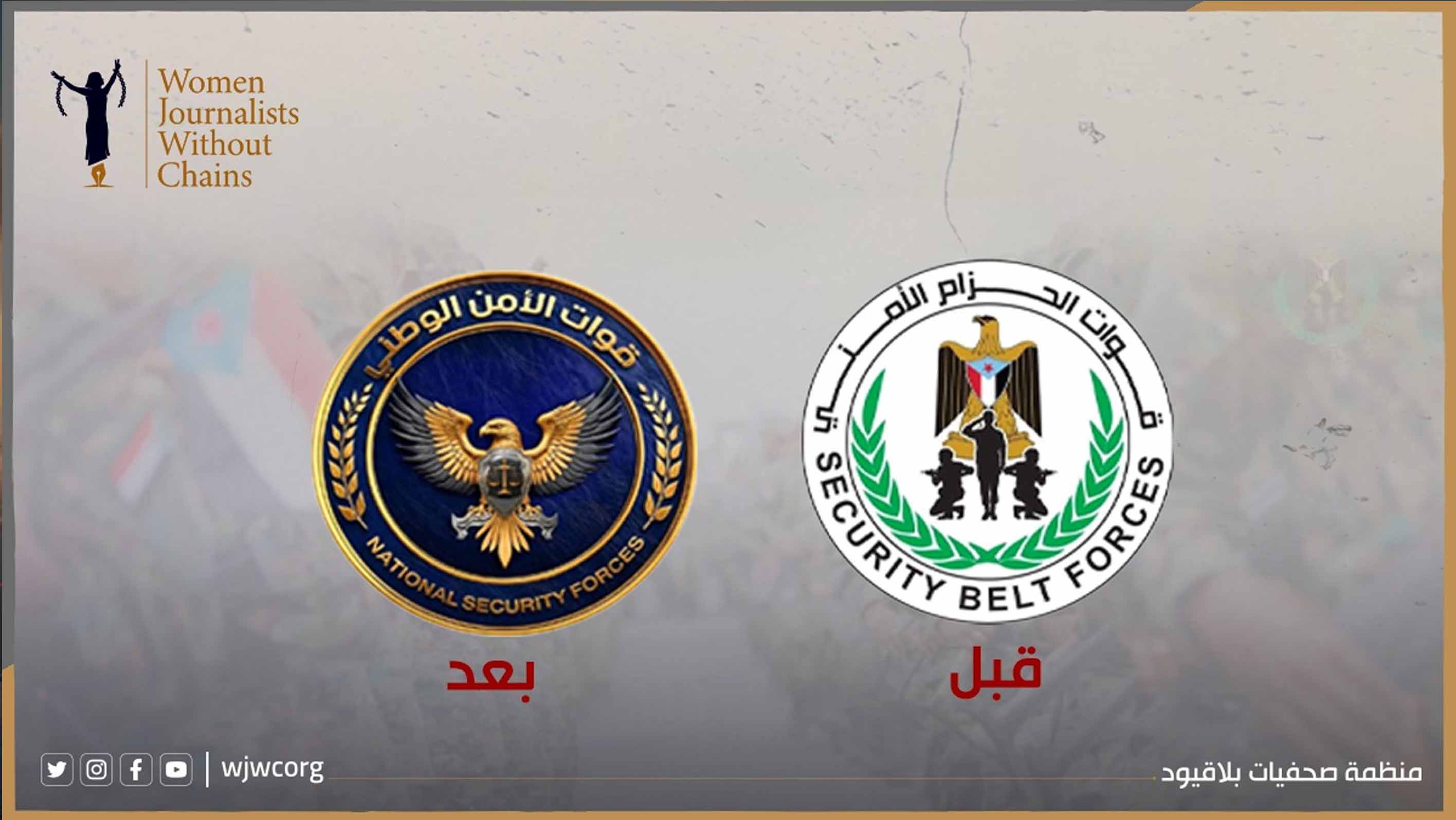
Renaming Forces Cannot Erase Documented Abuses Aden
The decision to rename the Security Belt Forces and integrate them under the title of “National Security Forces” does not constitute genuine security sector reform. Rather, it represents a dangerous step toward rebranding a documented system of serious violations under a new institutional cover, entrenching impunity and directly undermining any claims of institutional reform, state-building, or the establishment of the rule of law in Aden, Yemen’s temporary capital.
Justice for victims, the right to effective remedy, reparations, and guarantees of non-recurrence cannot be achieved through cosmetic restructuring or nominal changes. Meaningful reform requires full truth-telling, independent and effective criminal accountability, and the dismantling of leadership and institutional structures responsible for violations, in accordance with Yemen’s obligations under the International Covenant on Civil and Political Rights, the Convention Against Torture, and other relevant international instruments.
Over the past years, the Security Belt Forces—operating as part of the Southern Transitional Council and supported by the United Arab Emirates—have been implicated in a widespread and systematic pattern of grave violations in Aden and other areas. These violations include arbitrary arrest, enforced disappearance, torture and other forms of cruel, inhuman or degrading treatment, detention in unlawful facilities, extrajudicial killings, and the repression of freedom of expression, peaceful assembly, and civic activity. Women, journalists, and civil society activists have been among those specifically targeted.
Changing the name, insignia, or organizational structure of these forces does not alter their legal nature, erase their documented record of violations, or absolve those who commanded, supervised, or supported them from individual or command responsibility.
Under international law, accountability is determined by actions committed, not by labels or formal structures. Any restructuring process that is not preceded by independent criminal investigations, transparent judicial proceedings, and rigorous vetting of personnel and leadership constitutes institutional concealment of crimes and a continued violation of victims’ rights to truth and justice.
Announcements regarding the dissolution of the Southern Transitional Council or the reconfiguration of the political and security landscape do not nullify individual or command responsibility for serious crimes committed against civilians by affiliated forces.
Criminal responsibility for grave violations under international law is personal, non-transferable, and not subject to expiration. It cannot be erased by changes in title, position, or organizational affiliation. Any political settlement or transitional arrangement that disregards victims’ rights to truth, justice, and reparations constitutes an additional breach of international legal obligations and perpetuates impunity.
The termination of the United Arab Emirates’ direct military presence in Yemen does not absolve it of international legal responsibility for serious and systematic violations committed during its period of military involvement.
The UAE bears direct responsibility for the establishment, administration, and effective control of a network of secret detention facilities operating outside Yemen’s legal framework, where hundreds of civilians were arbitrarily detained, forcibly disappeared, and subjected to torture and other forms of cruel, inhuman, or degrading treatment, in clear violation of the Convention Against Torture and the ICCPR.
The UAE also bears responsibility for creating, financing, training, and supporting local armed formations operating beyond legal oversight, in violation of international humanitarian law. These acts amount to international crimes subject to universal jurisdiction.
Furthermore, UAE forces and local armed groups under their effective control have been implicated in systematic abductions and targeted assassinations of political figures, activists, religious leaders, and civilians. These acts constitute extrajudicial killings and crimes that may amount to war crimes and crimes against humanity under international humanitarian and criminal law. Such crimes are not subject to statute of limitations and require international investigation and prosecution.
The continued lack of transparency regarding the fate of secret detention facilities and the cases of abducted and forcibly disappeared persons in Aden and neighboring governorates—despite presidential directives ordering the closure of these facilities and the release of arbitrarily detained individuals—constitutes an ongoing violation of victims’ rights and undermines any claim of genuine institutional reform or transition toward the rule of law.
The absence of concrete action, transparency, and accountability in this critical file risks reproducing the same system of repression under new names and mechanisms.
Independent, international, and national investigations into all grave violations committed in Yemen by UAE forces and affiliated local formations are urgently required, as these acts may amount to war crimes and crimes against humanity under international law.
Immediate disclosure of the fate of all forcibly disappeared persons, the unconditional release of all arbitrarily detained individuals, the closure of all unlawful detention facilities, and the prosecution of those responsible for establishing, managing, or concealing abuses are legal obligations that cannot be delayed or negotiated away.
The international community, the UN Human Rights Council, the Office of the High Commissioner for Human Rights, and relevant UN mechanisms—including Special Procedures and Security Council expert bodies—must fulfill their mandates by:
• Establishing or reactivating independent international investigative mechanisms with clear mandates and full authority to document violations and identify individual and command responsibility.
• Ensuring the preservation of evidence in accordance with international standards to enable future prosecutions.
• Supporting national and international criminal accountability pathways to ensure no perpetrator escapes justice.
• Exercising effective legal and diplomatic pressure to prevent the evasion of accountability.
• Ensuring that political or security restructuring is not used as a cover to conceal crimes or recycle perpetrators within state institutions.
The restoration of the state and the rule of law cannot be achieved through renaming forces, cosmetic restructuring, or political settlements that bypass victims’ rights. It requires full truth-telling, genuine criminal accountability, reparations for victims, and concrete guarantees that violations will not be repeated.
Justice is not a political bargaining chip. It is a binding international legal obligation. Any process that excludes justice will inevitably reproduce violence, undermine peace, and entrench impunity.
Issued by:
Women Journalists Without Chains
January 24, 2026