
Wjwc News
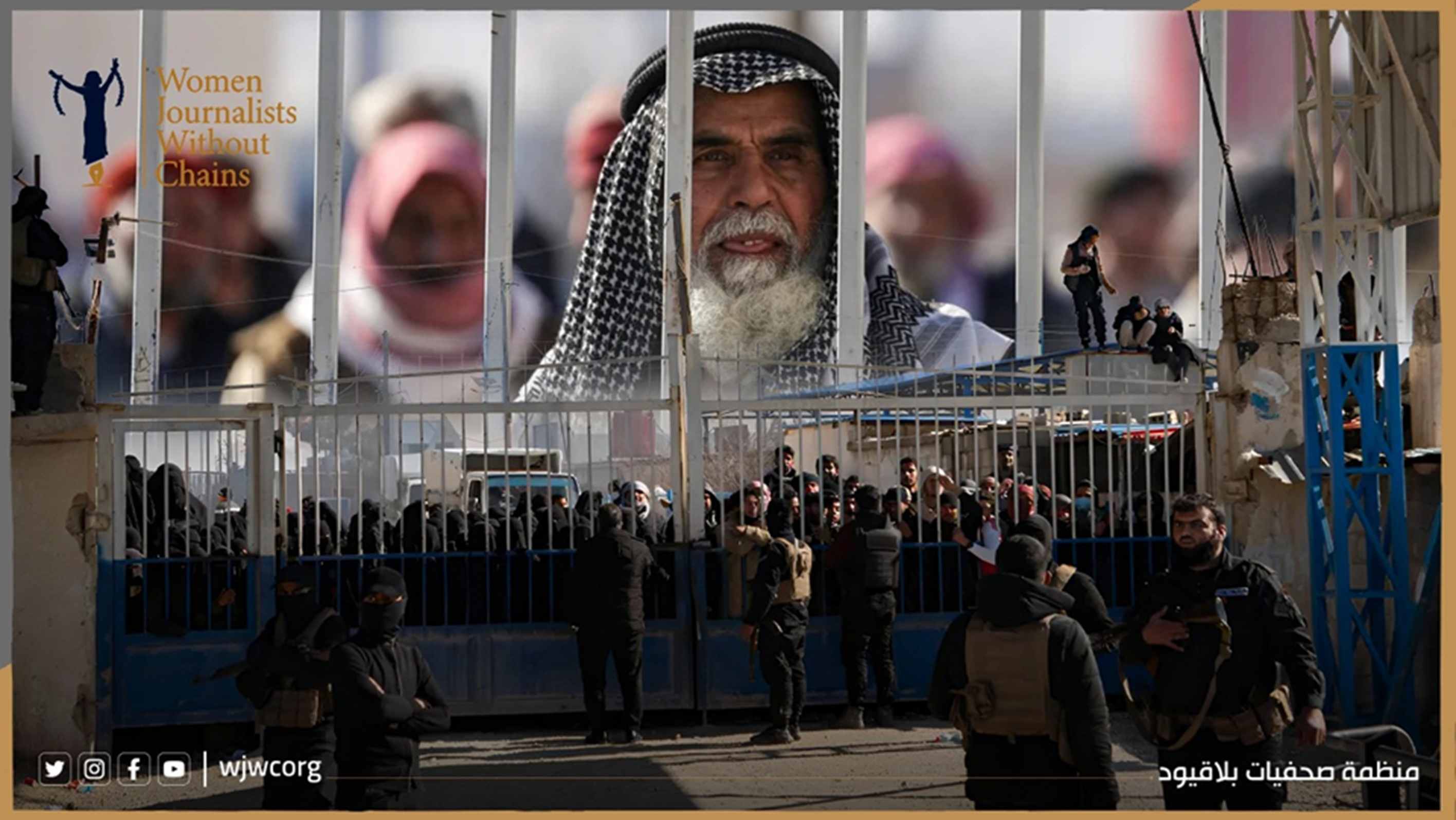
Iraq: No Safe Transfer — Detainees Handed Over to a Broken Justice System
The transfer of detainees accused of affiliation with ISIS from northeastern Syria to Iraqi custody raises serious concern, as Iraqi authorities begin receiving and prosecuting groups from Al‑Hol camp and Hasakah prison. This move marks a dangerous turning point that threatens thousands of lives with imminent risk of torture, unfair trials, and execution.
Documented reports confirm that an initial group of 275 detainees has already been transferred to Iraqi detention centers for interrogation by security forces. This move forms part of a broader plan, publicly announced by the United States military, to relocate up to 7,000 detainees from Syria to facilities under Iraqi control. Carrying out such transfers under current conditions constitutes a grave breach of international human rights obligations, particularly given the well established deficiencies of Iraq’s judicial and detention systems.
The Iraqi Supreme Judicial Council has asserted full jurisdiction over all transferred detainees, regardless of nationality, confirming that they will undergo investigation and trial under Iraqi procedures. This stance subjects individuals to a judicial framework repeatedly condemned by United Nations bodies and international human rights organizations for its systemic reliance on coerced confessions, summary trials, and the extensive use of the death penalty through deeply flawed legal processes.
Transferring detainees into such a system constitutes a direct violation of the principle of non-refoulement and may amount to complicity in torture, arbitrary detention, and arbitrary deprivation of life. Iraq’s counterterrorism prosecutions, conducted under Law No. 13 of 2005, have long been associated with confessions extracted through physical and psychological abuse, denial of legal counsel, and trials that fail to meet even the most basic standards of fairness and due process. Returning detainees to this environment is not a legal remedy—it is a transfer into a system of institutionalized abuse.
The timing of these transfers is particularly alarming. They follow the collapse of the January 18, 2026 security agreement between Syria’s new authorities and the Syrian Democratic Forces—an accord intended to stabilize northeastern Syria and determine the future of detention facilities housing thousands of detainees and their families. The breakdown of this agreement, coupled with renewed fighting and mass displacement, has created a highly volatile environment. In this context, the forced transfer of detainees amounts to exporting an unresolved crisis into a judicial system already weaponized as an instrument of political and sectarian punishment.
Documented evidence from previous monitoring has revealed a devastating reality within Iraqi prisons. Trials for terrorism-related offenses often last less than an hour, rely on secret informant reports or geographic proximity rather than material evidence, and result in mass death sentences or life imprisonment. Torture allegations raised by detainees are routinely dismissed, while courts continue to treat confessions—regardless of how they are obtained—as decisive proof of guilt. Thousands remain on death row under conditions of extreme overcrowding, with detention facilities operating far beyond capacity and functioning as sites of systematic abuse, disease, and neglect.
The transfer of detainees into such conditions creates a real and foreseeable risk of execution following unfair trials, in violation of the right to life under the International Covenant on Civil and Political Rights, as well as the absolute prohibition of torture under the Convention Against Torture. Executions based on coerced confessions constitute arbitrary killings under international law and may amount to crimes for which accountability is required.
In light of these facts, the following demands are set forth:
- An immediate suspension of all transfers of detainees from Syria to Iraq unless independent international monitoring and enforceable legal safeguards are established to prevent torture, arbitrary detention, and execution.
- A moratorium on executions in Iraq and a comprehensive review of all sentences issued on the basis of secret informant testimony or coerced confessions.
- Urgent intervention by the United Nations to ensure international oversight of Iraqi detention facilities and to prevent these transfers from becoming a new chapter of mass, legally sanctioned abuses.
- Immediate access for independent international human rights organizations to all detention sites receiving transferred detainees, including facilities in Nasiriyah, Taji, and Al Muthanna Airport.
- Legislative reform of Iraq’s Anti-Terrorism Law and Penal Code to bring them into compliance with international standards, limit the use of the death penalty, and prevent its deployment as a tool of collective or sectarian punishment.
Counterterrorism cannot be pursued through practices that replicate the very crimes they claim to combat. Justice cannot be built on torture, secrecy, and mass executions. Genuine accountability requires transparent trials, independent courts, and full respect for the inherent dignity and rights of every detainee. Continued international silence in the face of these practices amounts to tacit approval of systematic abuse.
All responsible parties will be pursued before international mechanisms to ensure that those who orchestrate or facilitate these violations do not escape accountability.
Released by:
Women Journalists Without Chains
January 27, 2026