
Wjwc News
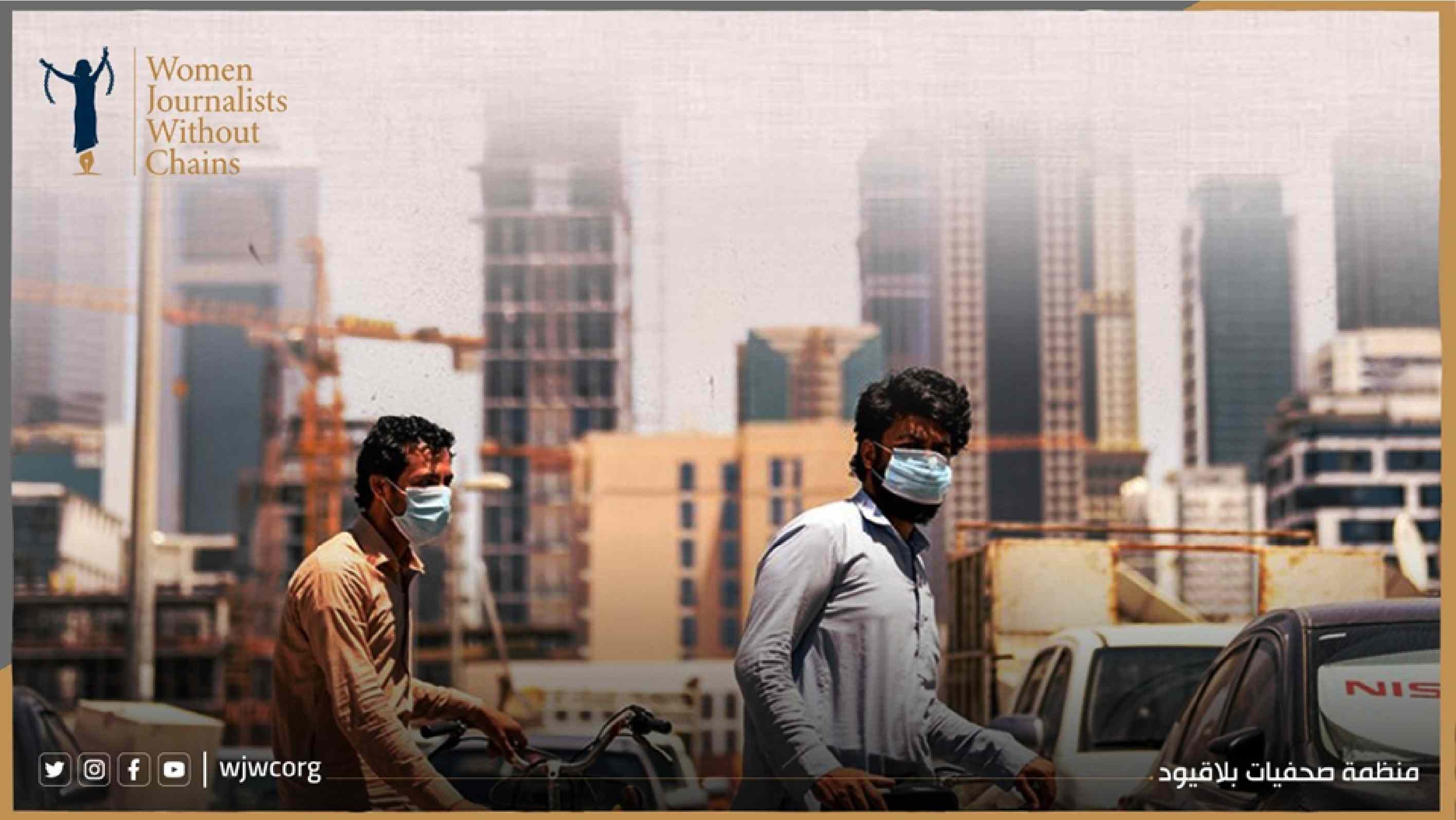
UAE: Systematic Sectarian Profiling and Mass Deportation of Pakistani Residents
Women Journalists Without Chains (WJWC) has reviewed consistent evidence pointing to an escalating pattern of arbitrary detention, sectarian profiling, and forced deportation targeting Pakistani nationals residing in the United Arab Emirates during 2026.
Based on testimonies compiled from deportees, families, community representatives, labor advocates, and regional monitoring sources, the organization has found credible indications of a coordinated security campaign that disproportionately affected members of the Pakistani Shia community through practices amounting to collective punishment and discriminatory expulsion.
The evidence reviewed by WJWC indicates that the campaign extended beyond routine immigration enforcement measures and evolved into a systematic operation characterized by sectarian identification, arbitrary arrest procedures, incommunicado detention, confiscation of property and personal devices, denial of legal remedies, and abrupt deportation without due process safeguards.
Field testimonies suggest that approximately 15,000 Pakistani nationals — representing nearly 5,000 families — may have been affected by varying forms of detention, deportation, visa cancellation, employment termination, or travel restrictions. Although Emirati authorities have not publicly acknowledged the existence of a sectarian deportation campaign, and Pakistani authorities have largely minimized or denied the scale of the issue, the convergence and consistency of testimonies reviewed by WJWC reveal a recurring operational pattern that warrants urgent international investigation.
Methodology and Sources
This report is informed by testimonies from affected Pakistani residents, family members, labor intermediaries, religious community figures, and independent regional observers between January and May 2026. Supplementary information was cross‑checked against media reports, migration monitoring data, legal analysis, and testimonies circulating within Pakistani expatriate networks in the Gulf region.
For security reasons, several names used in this report have been partially anonymized or modified to protect victims and their relatives from retaliation.
WJWC notes that the absence of transparency from Emirati authorities, combined with the reluctance of many victims to speak publicly due to fear of permanent blacklisting or reprisals, significantly restricts access to official documentation. Nevertheless, the consistency of independently obtained testimonies demonstrates sufficient evidentiary credibility to justify immediate international scrutiny.
Background: Regional Tensions and the Expansion of Security-Based Deportations
The reported deportation campaign emerged amid heightened geopolitical tensions across the Middle East throughout 2026, during a period marked by increasing regional polarization and intensified security monitoring of expatriate communities.
Pakistani nationals constitute one of the largest foreign labor populations in the UAE, with more than two million Pakistanis residing and working across various sectors including public administration, transportation, construction, information technology, finance, retail, and domestic labor. Remittances from Gulf-based Pakistani workers represent a critical economic lifeline for millions of families in Pakistan.
According to testimonies assessed by Women Journalists Without Chains (WJWC), the deportation campaign appeared to intensify following heightened regional security concerns linked to sectarian affiliations and political sensitivities associated with broader Middle Eastern conflicts. Victims consistently reported being questioned primarily about religious identity rather than alleged criminal conduct or immigration violations.
The resulting pattern strongly indicates that sectarian affiliation itself became a primary criterion for security targeting.
Sectarian Profiling as a Mechanism of Deportation
One of the most alarming findings documented concerns the apparent use of systematic sectarian profiling to identify individuals for detention and deportation.
Multiple deportees reported that Emirati security personnel examined names commonly associated with the Shia community — including names such as “Ali,” “Hussein,” and “Abbas” — during interrogations and identity checks. Victims consistently described religious affiliation as the central focus of questioning.
“Taha,” a Pakistani employee who worked for more than a decade with Dubai’s Roads and Transport Authority, stated that he was arrested directly from his workplace after security personnel identified his information in internal police systems. According to his testimony, he was given no prior warning and received no formal explanation regarding the legal basis for his detention.
Other victims described arrests occurring in public places including shopping malls, transportation hubs, and workplaces. Several reported that police officers inspected mobile phones, personal photographs, religious content, and communication records before ordering immediate detention.
WJWC also documented testimonies indicating that biometric surveillance technologies and Emirates ID tracking systems may have been used near Shia mosques and religious gathering sites to identify potential targets. One information technology specialist reported that he was deported despite being Sunni because authorities discovered he had visited an Imam Bargah with a friend.
These testimonies collectively suggest the existence of an extensive surveillance framework centered on religious association rather than individualized criminal suspicion.
Arbitrary Arrests and the Collapse of Due Process
Victims consistently described detention procedures lacking the most basic guarantees of procedural fairness.
Many deportees reported that they were never informed of specific accusations against them. Several stated that they were denied access to legal counsel, prevented from contacting relatives, and deprived of opportunities to challenge visa cancellations or deportation decisions before judicial authorities.
“Zahir Khan,” one deportee interviewed, recounted that security officers repeatedly questioned him only about his sectarian identity. When he acknowledged being Shia, officers allegedly replied that “this explains everything,” without presenting further allegations or evidence.
Another victim, Pakistani accountant Ali Abbas, reported that he had spent 15 years working for an Emirati government institution before suddenly being notified that his visa had been canceled. According to his testimony, he was deported the same day without being permitted to settle his employment affairs, access savings, or challenge the decision administratively.
A separate witness stated that he was arrested outside his office, had his phone and computer confiscated, and was transported to a detention facility where the overwhelming majority of detainees were Pakistani Shia residents. He described the treatment inside detention as degrading and punitive, adding: “We were treated like criminals despite never being charged with anything.”
The testimonies reviewed by WJWC reveal a pattern in which administrative deportation powers were allegedly transformed into tools of coercive sectarian punishment.
Detention Conditions and Allegations of Ill-Treatment
Women Journalists Without Chains documented serious allegations concerning detention conditions inside facilities including Al-Aweer and Jebel Ali detention centers.
Former detainees described overcrowded conditions, degrading treatment, prolonged intimidation, and physical abuse. Several reported beatings and forced stress positions. One witness described the assault of an elderly detainee recovering from leg surgery who was allegedly beaten because he could not kneel during security procedures.
Victims also described humiliating strip searches and threats by officers to publish videos of detainees online if they spoke publicly after deportation.
Numerous detainees reported being forced to wear blue prison uniforms immediately after arrest, which many interpreted as an intentional attempt to impose psychological humiliation and criminal stigma. Others described being ordered to keep their heads lowered beneath tables for extended periods while guards shouted insults and threats.
Food quality was repeatedly described as inadequate and degrading. Several detainees stated that they were denied communication with family members for prolonged periods, causing panic among relatives who had no information regarding their whereabouts.
WJWC further documented claims that deportations occurred in large daily batches exceeding one hundred individuals at a time. Victims stated they were transferred directly from detention centers to airports without being allowed to retrieve belongings, access bank accounts, or resolve housing and employment obligations.
Several deportees accused Pakistani consular authorities of issuing emergency travel documents categorizing them under vague labels such as “absconding” or “imprisoned,” potentially jeopardizing their future employment prospects throughout the Gulf region.
Economic Devastation and Confiscation of Financial Rights
The consequences of the deportation campaign extended far beyond physical removal from the UAE.
Multiple deportees reported that their bank accounts were frozen immediately following detention or deportation orders, leaving them unable to access salaries, savings, business assets, or end-of-service benefits accumulated over many years.
Business owners and professionals described losing properties, investments, and commercial partnerships worth millions of dollars due to abrupt entry bans and frozen financial accounts. For many families, the sudden disappearance of income resulted in immediate debt accumulation, housing insecurity, and inability to meet medical or educational expenses.
The impact has been particularly severe in economically marginalized regions of Pakistan where families depend almost entirely on remittances from Gulf-based relatives. According to estimates reviewed by WJWC, remittances from workers in the UAE constitute one of Pakistan’s largest external sources of foreign income.
By depriving deportees of earned wages and savings without transparent legal process, the measures documented in this report may constitute collective economic punishment affecting thousands of dependent family members who were never implicated in any alleged wrongdoing.
Legal Analysis: Violations of International Human Rights Standards
Women Journalists Without Chains concludes that the documented practices raise serious concerns under international human rights law.
The arbitrary expulsion of foreign residents without meaningful procedural safeguards violates fundamental protections established under Article 13 of the United Nations International Covenant on Civil and Political Rights, which prohibits expulsion without due process guarantees.
The alleged targeting of individuals based on sectarian affiliation constitutes a direct violation of the principles of equality and non-discrimination recognized under international human rights instruments and customary international law.
The detention practices documented in this report — including allegations of physical abuse, humiliating treatment, intimidation, and denial of communication with families — may also violate obligations arising under the United Nations Convention against Torture, to which the UAE is a party.
Furthermore, international standards governing migrant workers prohibit collective expulsion and require individualized examination of deportation cases, access to legal remedies, and protection of earned wages and property rights.
WJWC emphasizes that national security considerations cannot justify collective punishment, sectarian discrimination, or arbitrary deprivation of liberty. Even where states invoke security prerogatives, such measures remain legally constrained by principles of necessity, proportionality, legality, and non-discrimination.
The Silence of Authorities
Women Journalists Without Chains expresses deep concern regarding the limited response from both Emirati and Pakistani authorities.
Despite the scale of allegations, no transparent independent investigation has been publicly announced. Pakistani authorities have similarly failed to establish comprehensive mechanisms for documenting abuses, recovering confiscated assets, or providing legal and psychological support for deportees.
Victims interviewed repeatedly expressed feelings of abandonment by diplomatic institutions that they believed prioritized political and economic relations over the protection of citizens’ rights.
The continued absence of accountability risks normalizing discriminatory deportation practices and encouraging further violations against migrant communities across the region.
Conclusions
The evidence reviewed by Women Journalists Without Chains indicates that the UAE’s deportation campaign against Pakistani residents during 2026 was not limited to isolated administrative immigration actions. Rather, available testimonies point to the existence of a broader security-driven operation characterized by sectarian profiling, arbitrary detention, collective punishment, and serious procedural violations.
The convergence of testimonies concerning religious targeting, biometric monitoring, arbitrary arrests, denial of legal safeguards, abusive detention conditions, confiscation of financial rights, and sudden deportation establishes a credible basis for urgent international investigation.
The protection of national security cannot serve as a legal justification for discrimination based on religious identity or for practices that undermine the dignity and fundamental rights of migrant populations.
Recommendations
Women Journalists Without Chains calls upon:
The UAE Authorities
- To immediately suspend any deportation measures based on sectarian or religious profiling.
- To disclose the legal basis for all deportation decisions carried out against Pakistani residents during 2026.
- To grant detainees access to legal counsel, family communication, and independent judicial review.
- To permit independent international observers access to detention facilities.
The Pakistani Government
- To establish an emergency national mechanism for documenting cases of arbitrary deportation and financial confiscation.
- To provide legal, diplomatic, and psychological support for deportees and affected families.
- To pursue recovery of frozen wages, savings, and labor entitlements through diplomatic and legal channels.
United Nations Mechanisms
- To initiate an independent international investigation into allegations of sectarian discrimination and collective deportation.
- To request urgent visits by Special Rapporteurs on migrants’ rights, religious freedom, torture, and arbitrary detention.
- To ensure accountability for violations of international human rights standards.
International Companies Operating in the UAE
- To ensure they are not complicit in discriminatory dismissals or sectarian employment practices.
- To review termination procedures affecting deported employees and safeguard workers’ financial rights.
International Human Rights Organizations
- To intensify monitoring of migrant worker abuses in Gulf states.
- To document the humanitarian and economic consequences of collective deportation practices on vulnerable communities.
Women Journalists Without Chains reiterates that migrant workers are entitled to dignity, equality before the law, and protection from discrimination regardless of nationality, religion, or political climate. The preservation of these rights remains essential not only for individual justice, but also for regional stability and the credibility of international human rights protections.