
Wjwc News
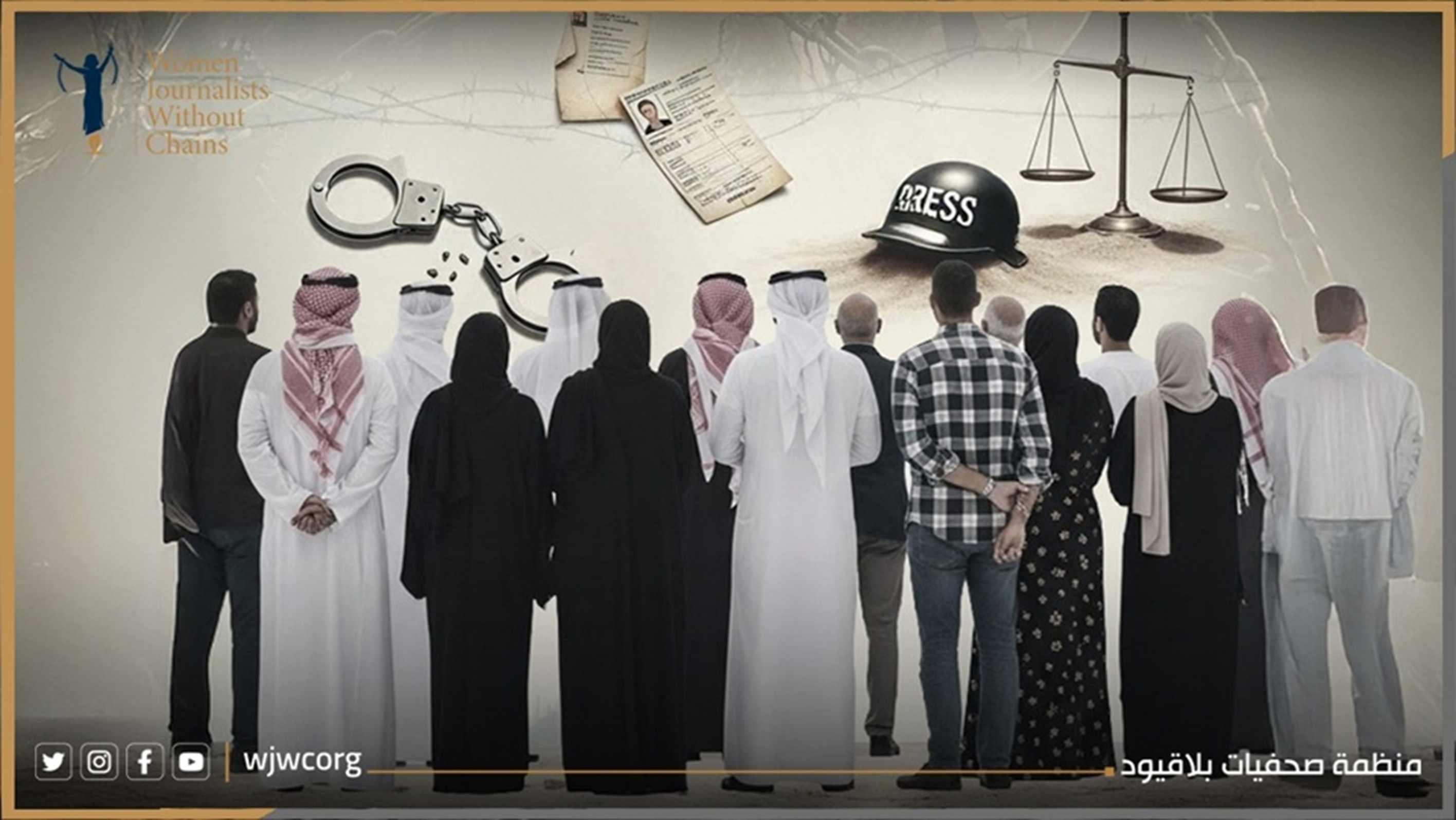
2025 MENA Human Rights Report: Grave Violations Documented by Women Journalists Without Chains
Geneva — Women Journalists Without Chains has released its 2025 annual report, “The Architecture of Repression: From Atrocities to Authoritarian Legality,” presenting a comprehensive assessment of the deteriorating human rights situation across the Middle East and North Africa.
The report documents a sharp escalation in serious violations, the consolidation of repressive governance models, and the systematic failure of accountability mechanisms, amid the normalization of impunity at both national and regional levels.
Covering the period from late 2024 through the end of 2025, the report examines human rights conditions in more than twenty countries, including Palestine, Sudan, Yemen, Syria, Egypt, Saudi Arabia, Iran, Tunisia, Algeria, Libya, Iraq, Lebanon, Jordan, Bahrain, the United Arab Emirates, Morocco, and Kuwait. It highlights the growing convergence of repressive policies across borders, demonstrating how similar legal, security, and surveillance frameworks are being replicated by different regimes to suppress dissent and restrict civic space.
The report finds that 2025 marked a critical turning point in conflict-affected areas, where entire civilian environments were transformed into sites of systematic violence amounting, in many instances, to war crimes and crimes against humanity. It documents mass civilian casualties, widespread destruction of infrastructure, and the deliberate deprivation of food and essential services in Gaza. In Sudan, it records large-scale atrocities and forced displacement, while in Yemen, Syria, and Libya, civilians continued to bear the brunt of protracted conflicts marked by indiscriminate attacks and the erosion of basic living conditions.
Beyond active conflict zones, the report identifies a significant expansion of institutionalized repression through the weaponization of law. Broad and ambiguously worded counterterrorism, cybercrime, and national security legislation has been increasingly used to criminalize peaceful political activity, journalism, and human rights work. Judicial systems, the report notes, have been routinely instrumentalized to impose severe sentences following trials that fail to meet fundamental standards of independence, due process, and fairness.
The digital domain has emerged as a central arena of repression. The report documents intensified surveillance practices, systematic blocking of independent media platforms, and a surge in prosecutions linked to online expression. It also exposes the use of sophisticated spyware technologies to target journalists and activists both inside their countries and in exile, in violation of the rights to privacy, freedom of expression, and personal security.
Equally troubling, the report emphasizes that women, children, minorities, refugees, and migrants bear the heaviest burden of these abuses. It records the weaponization of sexual violence in armed conflicts, the imposition of discriminatory and coercive measures against women, and severe violations of children’s rights, including killings, forced recruitment, and the deprivation of education and healthcare.
A central conclusion of the report is that impunity has become a structural feature of governance across the region. The persistent failure of national judicial systems to investigate or prosecute serious violations has compelled victims to seek international accountability, including through proceedings before the International Criminal Court and the International Court of Justice.
Women Journalists Without Chains calls on the international community and United Nations mechanisms to take urgent, concrete action, including halting arms transfers to parties implicated in grave crimes, securing the immediate and unconditional release of prisoners of conscience, and ensuring effective protection for journalists and human rights defenders.
The organization stresses that 2025 was not simply another year of violations, but a decisive moment that exposed how international inaction continues to enable cycles of repression and violence, undermining prospects for justice and sustainable peace.
The complete report is accessible to journalists, researchers, and human rights advocates by clicking here